A wedding bouquet in 2026 costs anywhere from about $40 CAD for one statement stem to $420 for a trailing amaranthus design, and the style you pick matters more than the stem count. The bouquet is in your hands for the processional, the vows, the portraits and half the candids, so it deserves a decision made on purpose rather than after everything else is booked.
The direction this year is restraint. Fewer stems, a clearer shape, one idea carried all the way through. Below are the six styles I would put in front of anyone planning a 2026 wedding, with what each costs, when its flowers are in season, and which dresses and venues suit it.
Key Takeaways
- A micro-bouquet uses five to twelve stems and typically runs $95 to $180 CAD.
- A single statement stem, such as one calla lily, is the lowest-cost style at roughly $40 to $90 CAD.
- Ruffled Regency Revival bouquets lean on peonies, which bloom in Ontario gardens in June; out of season they are imported and cost more.
- Trailing amaranthus bouquets are the most labour-heavy style, at roughly $280 to $420 CAD.
- Farm-to-Aisle bouquets of grasses, berries and branches are the most heat-tolerant and the easiest to dry afterwards.
- Match the bouquet to the dress: small and vertical for fitted gowns, fuller and rounder for A-line and ballgown shapes.
1. The Micro-Bouquet
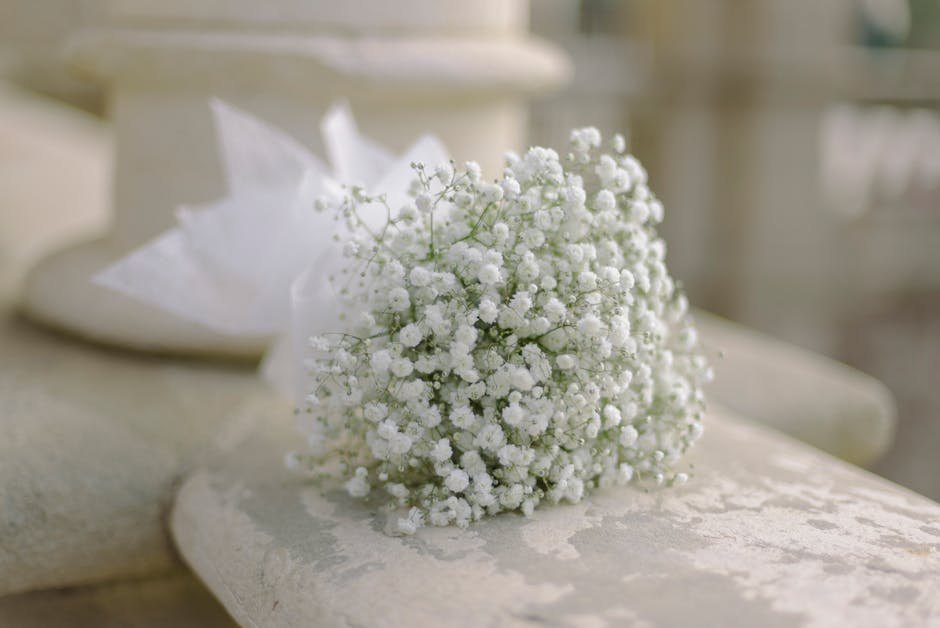
Think of something about the size of a grapefruit. Tight, architectural, every stem chosen, not a leaf in there to fill space. The micro-bouquet is my favourite style of the year because it asks for a decision and then shows it.
Five to twelve stems, built for precision rather than volume. A traditional round bouquet can hide behind abundance. This one cannot, so every flower in it has to be perfect.
Good flowers for it: ranunculus (café au lait tones especially), garden roses in one tight colour, sweet peas, muscari, hellebores, spray roses or anemones. For a more architectural version, group a few tulips or small proteas.
- Quality shows. There is nowhere to hide a bruised petal or a limp stem, so ask your florist where the flowers come from and when they arrive.
- Plan around the season: ranunculus and hellebores are spring flowers, sweet peas come in early summer.
- It suits fitted silhouettes: sheath, slip, column and clean crepe gowns. The small scale leaves the line of the dress alone.
- It is right at home at a city hall ceremony, an elopement, or any setting where a big bouquet would feel out of scale.
- Cost: roughly $95 to $180 CAD. Garden roses and ranunculus push it up; spray roses and sweet peas bring it down.
Choosing twelve stems over forty reads as confidence on camera. Against a silk gown in window light, a micro-bouquet looks like something framed. And if someone tells you that you "need" a bigger bouquet, get a second opinion.
2. The Single-Stem Statement
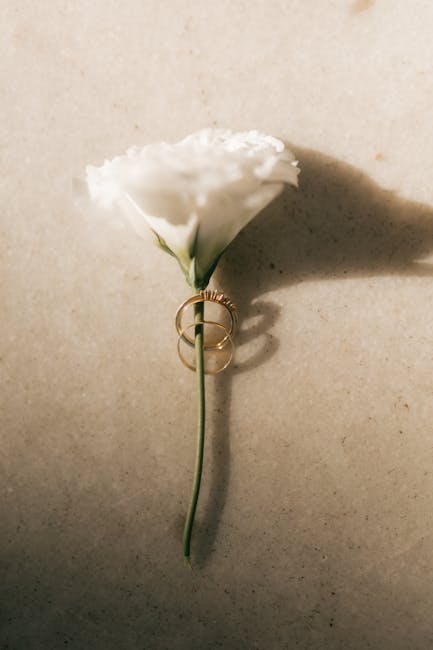
One stem, held like you mean it. A blush or white calla lily. A burgundy, near-black anthurium. A bird of paradise if you want the ceremony to look like a fashion shoot. The simplicity is the whole point, and it lands harder than you would expect.
Good flowers for it: calla lily (the classic), black or burgundy anthurium, bird of paradise, a long-stemmed protea, or one oversized dahlia for an autumn ceremony.
- The stem should be long, about 40 to 60 cm, and nearly bare. Freshness is everything, so ask your florist about sourcing and delivery timing.
- It pairs with clean, architectural shapes: mermaid, sheath, column and a tailored suit. It follows the vertical line of the body and reads as one continuous shape in photos.
- It is a polarising choice, and that is part of its charm. Carry it with conviction and it reads as intentional, not unfinished.
- It looks sharpest in modern rooms: galleries, lofts, pared-back chapels, rooftops.
- Cost: roughly $40 to $90 CAD. The savings can go toward the ceremony backdrop or the reception tables.
From across a room, a single stem tells you someone made a choice. No other bouquet does that as quickly.
3. The Regency Revival
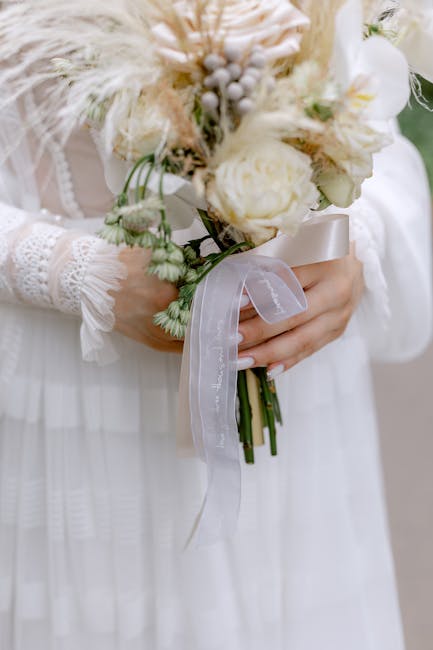
Soft and ruffled: peonies and garden roses in blush and cream, gathered loosely but with care, and a long silk ribbon in dusty blue trailing nearly to the hem. Carried through a garden in an Empire-waist gown, the ribbon catches the breeze and the whole thing looks painted.
The style borrows from early nineteenth-century dress, the look that period dramas have kept in fashion for several years. Think Bridgerton, grown up. The long ribbon, always silk and always in a muted tone, is what separates it from a standard round bouquet.
Good flowers for it: peonies at the heart, garden roses in blush, cream, champagne or dusty rose, sweet peas for lightness, lisianthus as the peony stand-in when season or budget calls for it, ranunculus for ruffled density, and a little astrantia for an old-garden feel.
- Peonies are the timing issue. In Ontario gardens they bloom in June, so late spring and early summer weddings get them at their best. Outside that window your florist imports them, and the price rises.
- The ribbon colour matters as much as the flowers. Dusty blue, faded terracotta, warm ivory, sage and soft apricot all work because they are muted rather than bright.
- It suits Empire-waist, A-line and ballgown silhouettes, lace, vintage-inspired gowns and long sleeves.
- It belongs outdoors or in a heritage setting: gardens, greenhouses, estates, meadows. In a sleek modern room it can feel like too much.
- Cost: roughly $200 to $320 CAD. Swapping peonies for lisianthus or ranunculus keeps the ruffled look for less.
This is one of my two favourites on the list. A long ribbon moving with the bouquet gives every photograph a softness that nothing else on this list quite matches.
4. The Modern Trailing
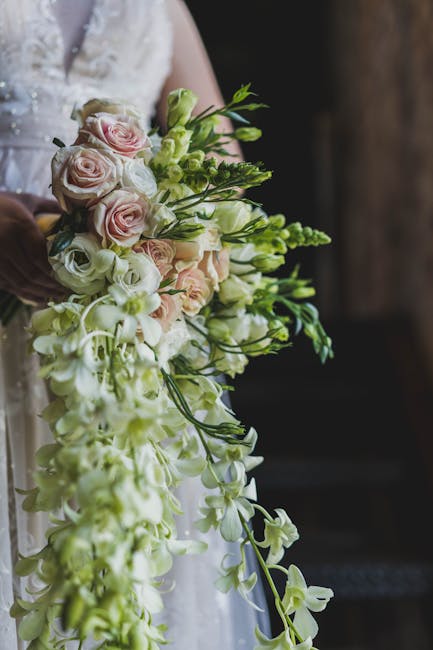
A bouquet that moves when you move, trailing past the hip and drawing a line from your hands toward the floor. This is not the solid waterfall cascade of the 1980s, which needed so much stem mass it looked like a shrub. The modern version is airy and open, with space built in so it breathes.
Amaranthus carries it. Its long, velvety, drooping tassels give drama without weight, read as deep burgundy or near-black depending on the variety, and sit happily beside pale garden roses or terracotta dahlias.
Good flowers for it: amaranthus as the anchor, garden or spray roses to build the top, long or seeded eucalyptus for movement, Italian ruscus for structure, trailing jasmine for softness, and a dahlia or protea near the hand-tie as a focal point.
- Amaranthus is a late-summer and fall crop, which makes this a natural choice for August through October. Earlier in the year it comes from greenhouse growers at a premium.
- It is the most fragile style here. Keep it in water or wrapped in damp tissue until the ceremony, and expect a vigorous hug to shift it.
- It pairs with flowing, unstructured fabrics: chiffon, organza, tulle with movement, draped crepe.
- It needs height and length to show off: a long aisle, a high ceiling, a barn with open rafters, a staircase entrance.
- Cost: roughly $280 to $420 CAD, mostly florist labour. The open structure takes time to build.
This is the splurge. If the processional and the aisle photographs matter most to you, it is the bouquet that earns its cost.
5. The Monofloral Cluster
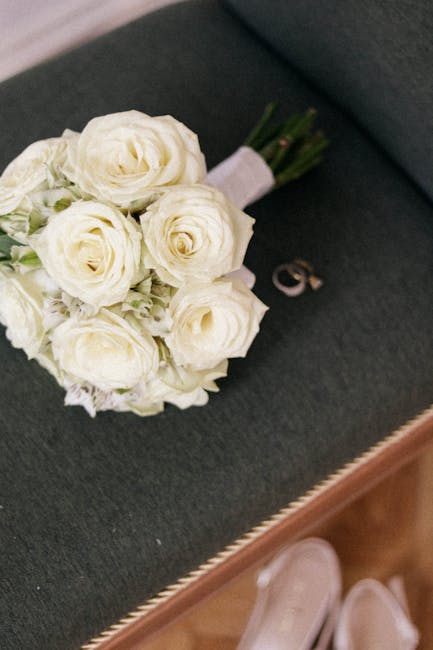
Interior designers have a rule: when in doubt, commit. Pick one pattern and use it fully. The monofloral cluster applies that to flowers.
One flower type, one colour family, packed into a dense, rounded shape. No supporting cast. Forty garden roses, or sixty tulips, or thirty peonies, held so tightly it looks like an object.
Good flowers for it: garden roses in one deep colour, white or pale pink tulips for a sleek spring version, peonies for the fullest result, ranunculus for a tighter geometric look, black-and-white anemones for contrast, or proteas for a sculptural texture.
- One colour family does not mean one shade. Two or three tones of the same hue give it depth, so ask your florist to build a gradient.
- It works in any season, because it is built around whatever flower is at its peak that month: tulips in spring, dahlias in September.
- It suits almost any silhouette and does particularly well with ballgowns and A-lines, where the round shape echoes the skirt.
- It fits a modern room and a traditional one equally well.
- Cost: roughly $160 to $280 CAD. Tulips and spray roses sit at the low end; peonies and imported garden roses at the high end.
Choosing one flower and doing it completely is a statement of taste. It says you know what you want, and that clarity shows in the photographs.
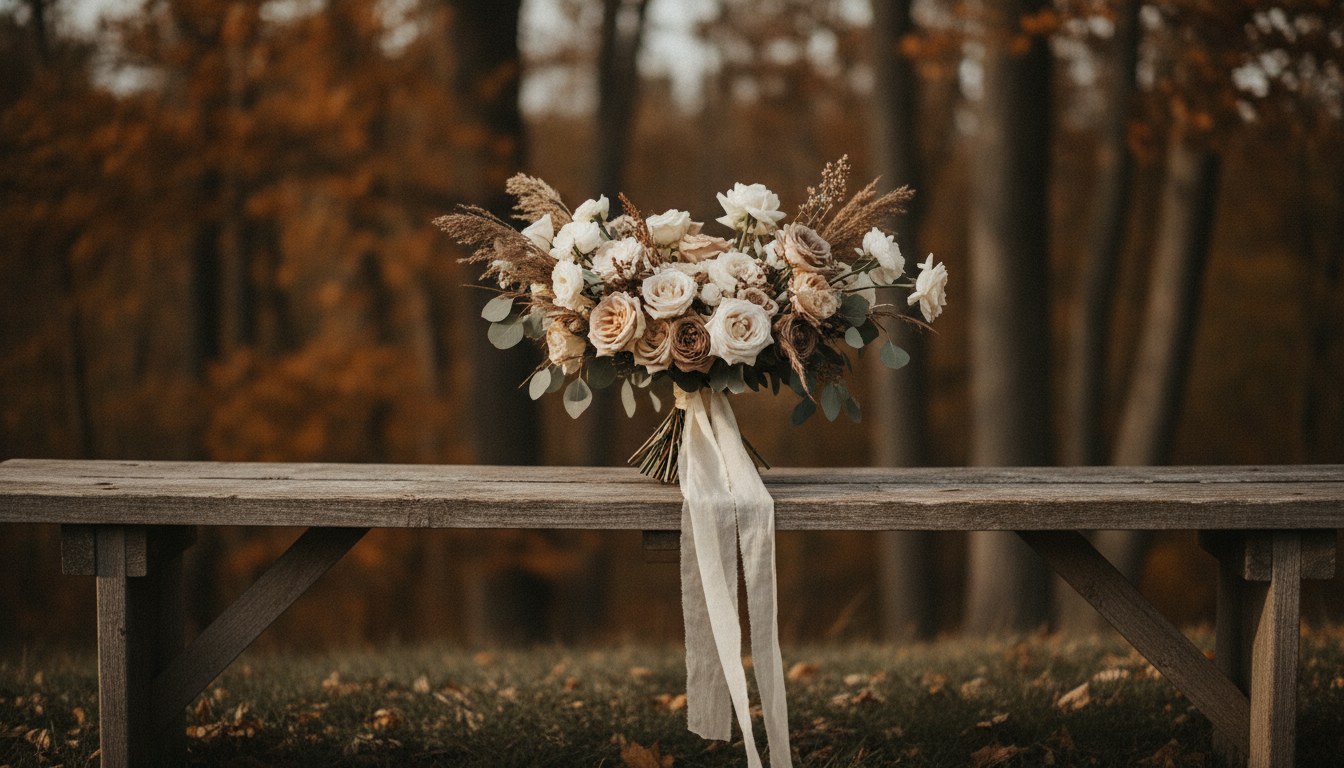
6. The Farm-to-Aisle
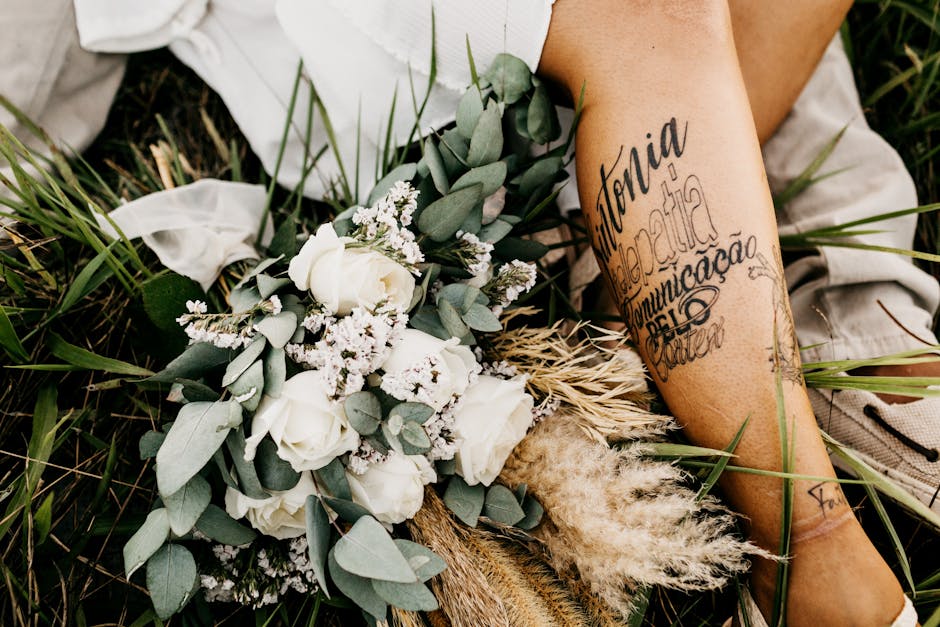
This one looks gathered from the field ten minutes before the ceremony, and it takes real craft to look that way. Red hypericum berries. Pampas or bunny tail grass. Eucalyptus branches with texture. A few terracotta garden roses tucked in among it all. It is the natural pick for a late-summer barn or farm wedding, which Northumberland County, Ontario has plenty of.
The style has moved past the all-dried, all-pampas look of a few years ago. There is structure under the wildness now; the gathered effect comes from careful selection, not randomness.
Good flowers for it: hypericum berries, pampas or bunny tail grass, seeded eucalyptus and branches, terracotta or rust roses or dahlias as the colour anchor, dried protea heads for a focal point, and woody stems such as quince or olive for height.
- It is the most heat-tolerant style here. Berries, grasses, pods and branches handle an outdoor August ceremony far better than delicate blooms.
- It is also the easiest to keep. Hang it upside down somewhere warm and dry, and the grasses, pods and berries hold their shape for years.
- It suits flowing, bohemian gowns: chiffon, textured lace, tiered skirts. With a very sleek, architectural dress the wildness can clash.
- It belongs in barns, orchards, vineyards, gardens and farm properties. In a hotel ballroom it looks out of place.
- Cost: roughly $180 to $350 CAD. The range reflects local seasonal stems (inexpensive) against imported premium blooms added to the mix. Built mostly from local late-summer material, it can come in under $200.
This is my other favourite. A bouquet made from what the season is producing ties the day to its place.
How to Choose Your Bouquet Style
Start with the dress. The bouquet should work with the shape of the gown, not fight it:
- Fitted and mermaid: Single-Stem Statement or Micro-Bouquet
- A-line and ballgown: Regency Revival, Monofloral Cluster or Modern Trailing
- Flowing and bohemian: Farm-to-Aisle or Modern Trailing
- Slip or column: Micro-Bouquet or Single-Stem Statement
- Lace or vintage-inspired: Regency Revival or Farm-to-Aisle
Then the venue. A trailing bouquet needs height and a long aisle. A micro-bouquet works anywhere. A Farm-to-Aisle looks lost in a sleek urban hotel.
Then the budget. A single stem or a micro-bouquet delivers real impact under $200, which leaves room elsewhere in the floral spend. If you are still setting that number, our guide to a realistic wedding budget shows where flowers usually sit against everything else.
Finally, check the season before you fall for a flower. A peony-heavy bouquet pinned for a November wedding is the classic mismatch. A florist can source almost anything in any month, but out-of-season stems cost more and are rarely at their best. For what blooms when, see the best wedding flowers by season.
A quick seasonal guide:
- Spring (March to May): ranunculus, sweet peas, tulips, hellebores, muscari, with peonies arriving in June
- Summer (June to August): peonies early, then garden roses, lisianthus, dahlias, amaranthus, lavender
- Autumn (September to November): dahlias, amaranthus, hypericum berries, proteas, grasses
- Winter (December to February): hellebores, anemones, greenhouse tulips, proteas, dried elements
One last styling note: hold the bouquet at hip height, not pressed against your sternum. It shows your waistline, keeps the dress visible in photos and lets your shoulders drop. It sounds small. It is not.
Related reading:
- 5 Stunning Flower Arrangements That Transform a Dinner Table: carry the bouquet's palette into the centrepieces.
- 7 Wedding Colour Palettes for 2026 by Season and Venue: settle the colour direction before you brief your florist.
- Questions to Ask Your Wedding Vendors: what to ask the florist before you sign.
There is no wrong answer with bouquets, only answers that fit your dress, venue and season better or worse. If you are pulled toward two or three of these at once, a good florist can usually build a hybrid.
Vendor sourcing is part of The Signature Bloom, our partial planning package; you can see what each package covers on the services page. To talk through your bouquet, book a consultation. Bring a photo of your dress and three or four images you have saved.