The right wedding dress silhouette is the one that suits your venue, your season and the way you want to move, and there are ten worth knowing before you book a boutique appointment. Each shape was built to do a specific job. Know the job, and a rack of white gowns stops looking like a wall.
Most of these shapes are older than they look. The empire waist dates to the early 1800s. The A-line was named by Christian Dior in 1955. And the white gown itself became the default only after Queen Victoria married Prince Albert in 1840 in Spitalfields silk trimmed with Honiton lace. Before that, most brides wore a best dress in brown, grey or light purple that they could wear again.
Key Takeaways
- Queen Victoria's 1840 wedding gown of Spitalfields silk and Honiton lace made white the standard bridal colour; before it, most brides wore a practical coloured best dress.
- The empire waist, with its seam just below the bust, was the fashionable line in France and England from about 1800 to 1819, popularized by Empress Joséphine.
- Christian Dior named his Spring-Summer 1955 couture collection the A line, and the name stuck to the shape.
- The steel cage crinoline, which the V&A dates to 1857, replaced layers of heavy petticoats and made the full Victorian skirt wearable.
- Carolyn Bessette's 1996 bias-cut silk crêpe slip dress by Narciso Rodriguez set the template for minimalist bridal gowns.
- Match the silhouette to the venue's scale and surface first: a ballgown fills a ballroom, while a beach or farm lawn calls for a shape that moves.
1. The Empire Waist
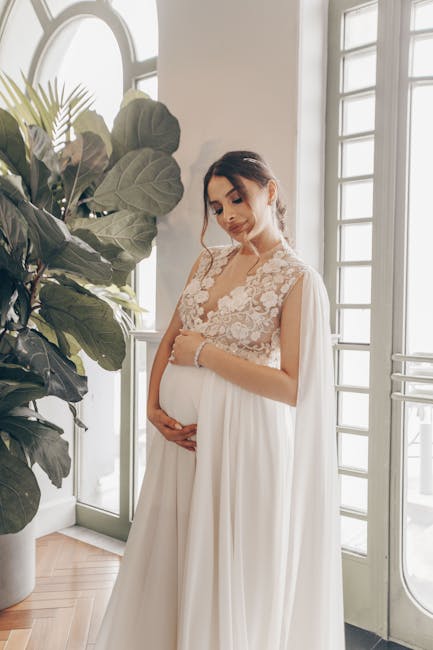
High seam, loose skirt, nothing fighting the heat. The empire waist is the shape for an outdoor ceremony in July.
It takes its name from the First French Empire. The empire silhouette puts a fitted bodice just below the bust and lets a long skirt skim the body without petticoats underneath. It was the fashionable line in France and England from about 1800 to 1819, it borrowed from the draped dress of ancient Greece and Rome, and Empress Joséphine Bonaparte made it famous. Fine cotton muslin and silk were the fabrics of the day, and they still are the right ones.
The high waist lengthens the body and takes attention away from the hips and midsection. It is one of the kindest shapes for a pregnant bride. With a long torso the seam can sit a little high, so ask the boutique whether it can be lowered. Put it in a garden, on a beach or in a barn. Keep it out of a black-tie ballroom, where it can look underdressed.
Practical notes:
- Chiffon, charmeuse, silk and georgette make this shape float. Heavy fabric flattens it.
- Thin fabric through the midsection can be sheer. Ask about a lining.
- Slippery fabric can photograph flat in bright sun. Ask your photographer how they handle it.
- Alterations are usually light: a hem and a small bodice adjustment.
My favourite shape for an August wedding. It is cool to wear for ten hours, and it moves in the breeze off the lake.
2. The Ballgown
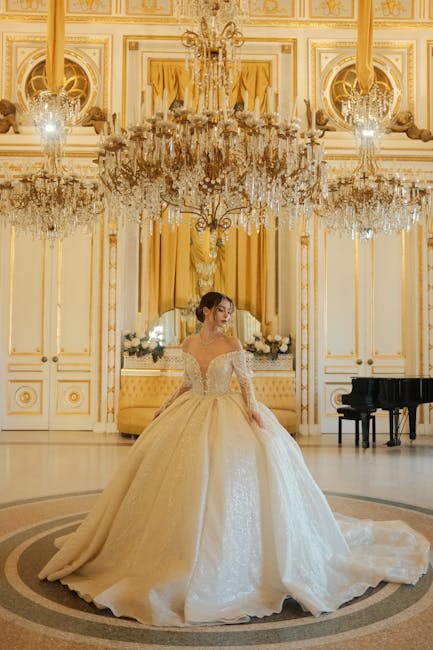
A fitted bodice and a skirt that fills the doorway. The ballgown is built for the entrance.
Queen Victoria's 1840 gown set the full skirt as the bridal ideal, and engineering made it bigger. By the 1840s and 1850s, wide skirts needed eight or more petticoats, and the weight was punishing. The steel cage crinoline, which the V&A dates to 1857, replaced them with spring-steel hoops joined by tapes. It was lighter, and women still called it a birdcage.
The fitted bodice and full skirt make an hourglass on most figures. The scale is the catch. A ballgown fills a ballroom, a cathedral or a heritage hall with a high ceiling, and it overwhelms a backyard or a courthouse. If you are petite, expect a lot of hem work.
Practical notes:
- You can dance in it, but practise at home first.
- Sitting takes planning, because the skirt wants to spread. Leave room at the head table.
- In a hall without air conditioning, pick layered tulle over heavy satin.
- Alterations run higher than most shapes, because every skirt layer has to be hemmed.
If your venue cannot hold the skirt, the skirt will hold your venue hostage. Measure the aisle.
3. The Sheath
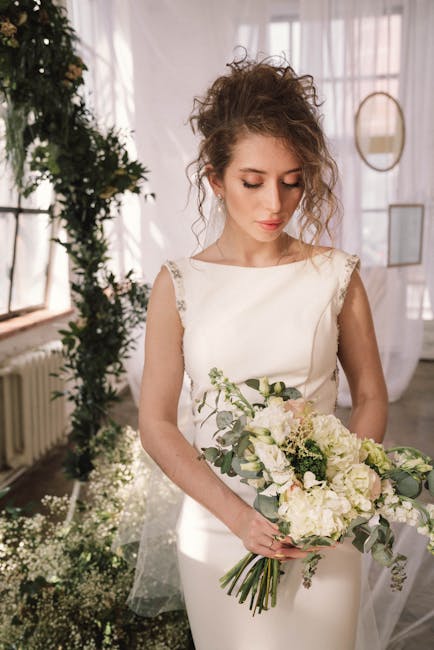
A sheath follows the body from shoulder to hem with no added volume. There is no structure to carry the eye past a poor fit, so every seam shows. A plain silk sheath is harder to make well than a ballgown with twenty layers of tulle.
It rewards anyone comfortable in a close-fitting dress. Wear it on a beach, at City Hall, in a small garden or in a clean modern space. It reads as deliberate rather than dramatic, which leaves room for a sculptural earring, an architectural veil or a bold shoe.
If you like the sheath, look at bias-cut versions in heavy silk. The bias gives the fabric stretch and movement without adding volume, and it keeps the line clean when you walk.
Practical notes:
- There is no margin for a poor fit. Budget more for alterations, not less.
- If it restricts your stride, ask for a kick pleat or a short slit at the hem.
- Crepe, bias-cut satin and matte jersey drape well. Stiff fabric makes ridges.
- Precision fitting costs more per adjustment than a full skirt does.
This is my pick for anyone who already knows exactly who they are. It does not borrow personality from a big skirt. It asks for yours.
4. The A-Line
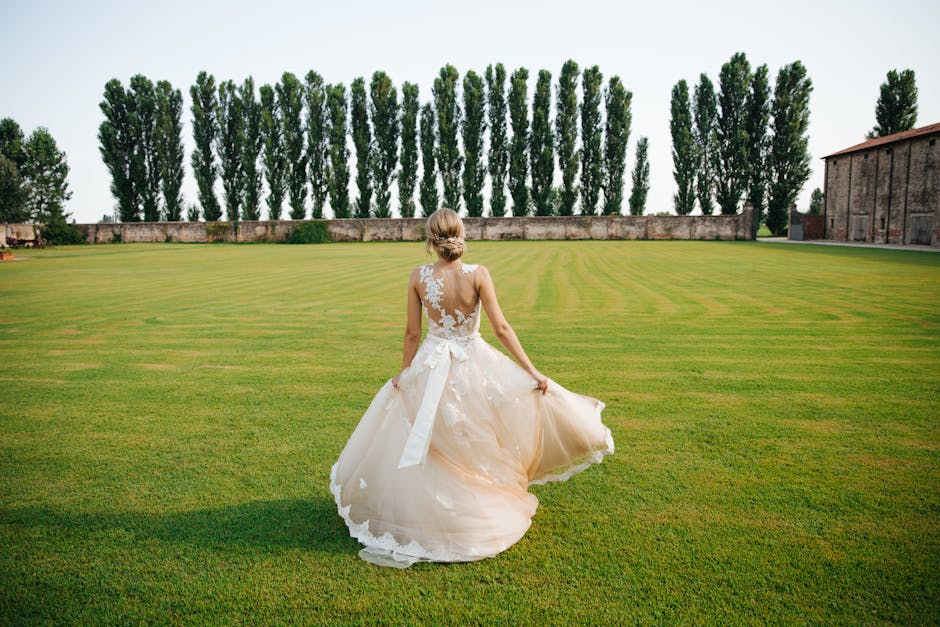
Christian Dior named his Spring-Summer 1955 collection the A line, after the letter the silhouette formed: narrow at the top, widening toward the hem. It followed his H line of Fall-Winter 1954, and his collection notes describe it as "a looser, more flared line". The name outlived the season.
In a wedding gown, the A-line fits at the natural waist and widens gently, with no hoop and no dramatic sweep. It lengthens a petite frame, balances fuller hips and suits an athletic build. You can sit, dance, crouch for portraits and hug your grandmother without negotiating with the skirt. If you have no idea where to start, start here.
Texture keeps it from looking plain: lace appliqué, tone-on-tone florals, a little ruching at the waist. A high neck or a one-shoulder neckline changes the whole mood while the skirt stays the same.
Practical notes:
- The skirt hides most footwear, so comfortable shoes are an option.
- The hem is easy to shorten without spoiling the line.
- It works in every season and at every kind of venue.
- It is usually the simplest silhouette to alter.
The A-line is the dependable one, and that is praise. A dress you can stop thinking about lets you pay attention to the day.
5. The Mermaid
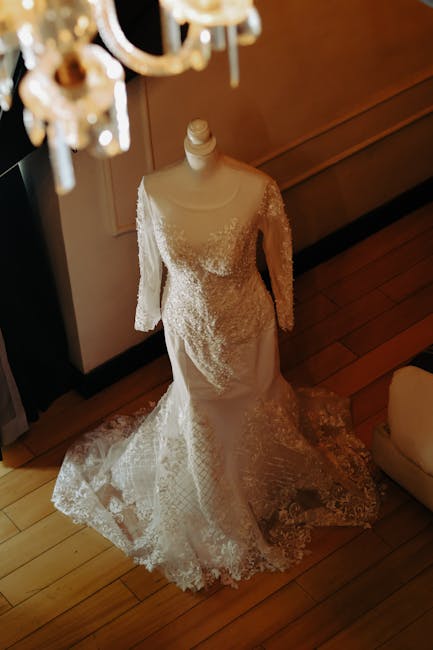
Fitted through the bodice, waist, hips and thighs, then a sudden flare below the knee. The mermaid is the most dramatic silhouette on this list, and it makes demands in return.
It photographs best from the side, where the curve and the flare read clearly. Put it in a formal indoor room: a hotel ballroom, a heritage hall, an evening reception. I would not choose it for an outdoor ceremony on uneven ground, or if you plan to dance for five hours. Mobility is limited. That is the trade.
If you love the look but not the restriction, ask for a soft mermaid, where the fitted section eases into the flare more gradually, or for stretch fabric such as structured jersey. A detachable overskirt changes the look for the reception.
Practical notes:
- Sit down at your fitting, in a chair the height of the reception chairs. If you cannot, ask about a movement panel.
- Practise stairs in the dress before the wedding.
- Heels keep the line. Flats shorten it and let the back drag. Block heels are the compromise.
- Fitting through the hips and thighs takes skilled hands and several appointments, so it costs more.
6. The Trumpet
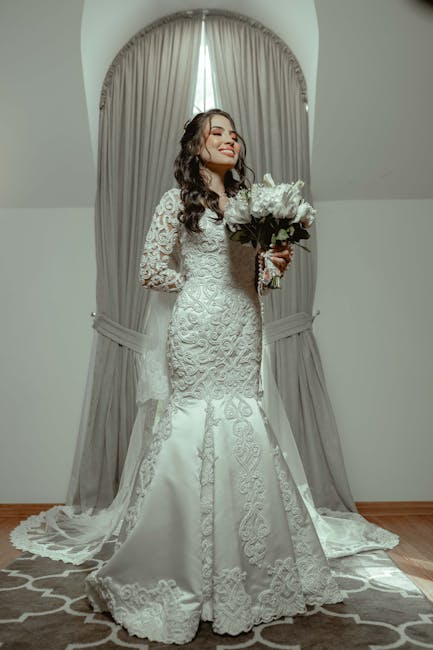
The trumpet asks a practical question: what if you want to eat dinner and dance at your own wedding? It keeps the fitted shape of the mermaid, but the flare starts at mid-thigh instead of below the knee, so your legs have room.
That one change moves it halfway between the mermaid and the A-line in both drama and comfort. If you are torn between those two, try this. It suits formal and semi-formal settings, looks sculptural from the side and forgives a crowded dance floor.
Stretch crepe and structured satin help it hold the fitted line while you move.
Practical notes:
- The higher flare lets you take a longer stride and sit more naturally.
- You are not locked into high heels. Wedges and block heels both work.
- Like the mermaid, it needs precise fitting, so budget for it.
The trumpet is the practical one of the fitted shapes. You keep the look and your mobility.
7. The Tea-Length
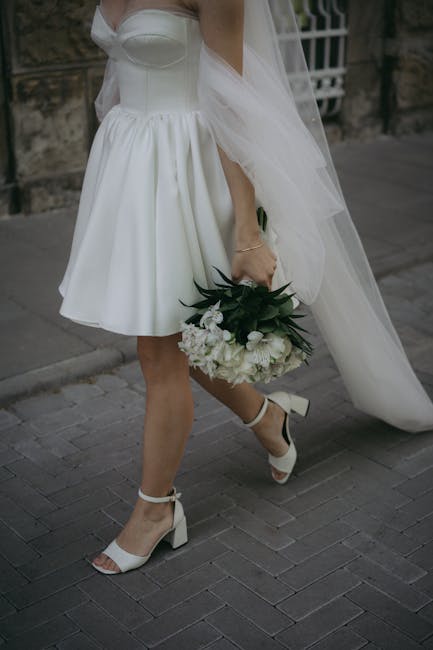
A hem between the knee and the ankle shows the shoes and frees the feet. The tea-length dress has a vintage feel and a practical one: it does not drag on grass, sand or a wet patio.
It suits garden parties, City Hall, a brunch reception or a second wedding. It also works as a second look: change into it after the ceremony and dance. And a dress chosen partly because the shoes are spectacular is a perfectly good reason.
Look for midi-length gowns in lace, satin or structured chiffon, cut with the same care as a floor-length gown rather than as an afterthought.
Practical notes:
- Proportion matters at this length. If you are shorter, a higher waist and fuller skirt add height. If you are taller, a relaxed A-line version looks clean.
- The shoes are fully visible, so they belong in the budget and the look.
- A shorter hem is usually easier and cheaper to take up than a floor-length one.
The most underrated silhouette on this list. It is hard to look stiff in a dress you can dance in.
8. The Slip Dress
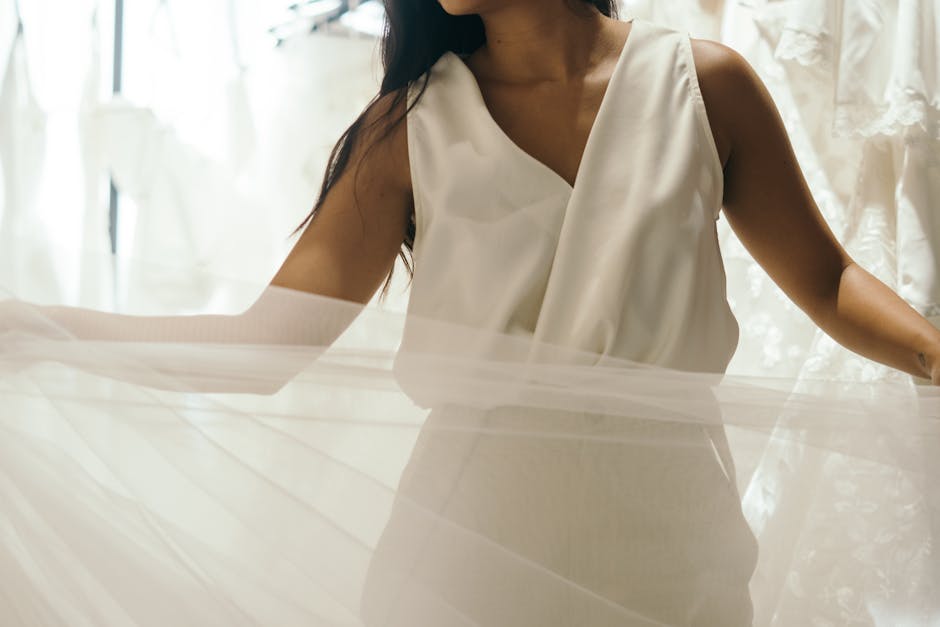
On September 21, 1996, Carolyn Bessette married John F. Kennedy Jr. on Cumberland Island, Georgia, in a pearl-white silk crêpe slip dress cut on the bias with a cowl neckline, designed by Narciso Rodriguez. No beading, no structure. The dress broke with the full princess gowns of the decade and launched the minimalist bridal look that is still copied.
The slip dress suits anyone comfortable with minimalism as a way of dressing, not only as a look. It photographs with intimacy rather than drama. Choose it for a small ceremony, a civil ceremony or an evening where the focus is on the two of you rather than on the spectacle.
Look at cowl backs, fine straps and bias-cut twists. They add movement without adding volume.
Practical notes:
- Fabric is the whole dress. Silk crepe, silk charmeuse and matte jersey are the three worth considering.
- It shows everything underneath. Plan the undergarments early and bring them to every fitting.
- Accessories carry more weight here: one sculptural earring, a fine chain, a clean updo. Too many fight the dress.
- Bias cuts need skilled hands and may need more than one fitting.
The slip dress gives you nothing to hide behind. For the right person, that is the point.
9. The S-Bend Corset
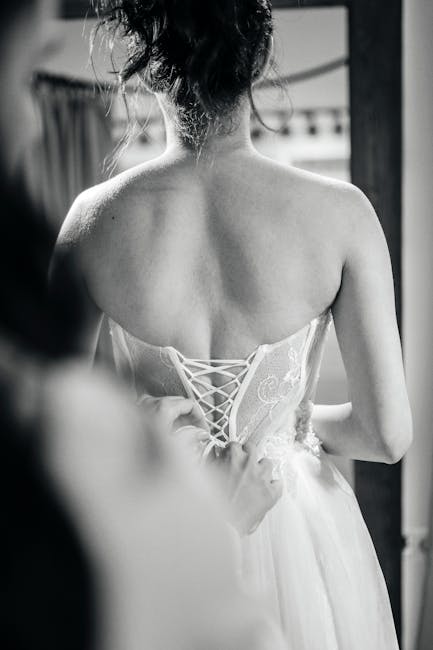
This is the strangest shape in the history of the wedding dress. Around 1900 the fashionable body was pushed into an S: chest forward, hips back, a flat front in between. The straight-front corset did the pushing. It was introduced as a "health corset", it was the prevailing look by 1900, and it shaped how women dressed and stood for more than a decade. The name "S-bend" came later.
Nobody is rebuilding that posture today, and that is good news for your spine. What survives is the structure: a boned bodice, a nipped waist and boning worn on the outside as part of the design. It suits fashion-forward weddings and anyone drawn to Victorian or Edwardian romance. It pairs with a full skirt, a slim skirt or separates.
Practical notes:
- Construction decides comfort. A poorly built corset is stiff and unstable, so ask the boutique who makes the bodice.
- Ask how long the gown can be worn comfortably, and build breaks into the day's timeline.
- It pairs well with an updo, a dramatic veil and vintage-inspired jewellery.
- Corset and boning work is some of the most technical alteration there is, and it is priced that way.
10. The Bridal Suit
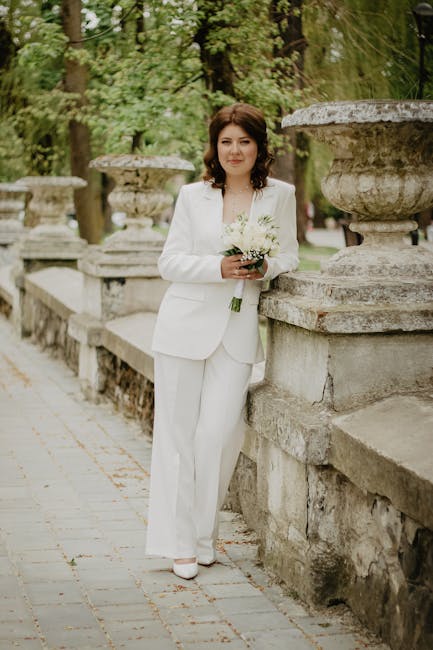
A wedding dress does not need to be a dress. The suit, with a sharp blazer and tailored trousers or a skirt, is a fully bridal choice.
Its history runs through two Yves Saint Laurent moments. In his Autumn-Winter 1966 collection he showed Le Smoking, a tuxedo cut for a woman's body. In 1971, Bianca Jagger married Mick Jagger in Saint-Tropez in a white Saint Laurent suit: a tuxedo jacket over a bias-cut skirt, with a wide-brimmed hat and a short veil. Bridal suits still borrow from it.
A suit suits anyone who wants to look like the best version of how they dress every day. It works at City Hall, on a rooftop, in a backyard and, with the right tailoring, in a ballroom. Wide-leg trousers, a strong lapel and separates you can wear again are all good bets. A jumpsuit is a close cousin.
Practical notes:
- Tailoring is everything. An unaltered suit reads as office wear.
- Shoes, jewellery and hair carry more of the look. A statement shoe or earring does a lot of work.
- Structured crepe, wool-silk blends and twill photograph well. Avoid fabric that creases on first wear.
- Tailoring to a precise fit takes skill, and made-to-measure costs more again.
How to Choose Your Silhouette
Start with how the day will run, not with a Pinterest board. Five questions narrow ten shapes to two or three.
How close a fit do you want? The mermaid and the sheath need you to be comfortable in a close fit. The ballgown can swamp a petite frame if the fabric is heavy. The A-line and the empire waist fit the widest range of bodies.
How will you move? If you plan to dance, look at the trumpet, A-line, tea-length, slip dress and suit. If you want a slow entrance and an evening in one place, the ballgown and the mermaid have presence. Plan for the wedding you are having, not an imagined one.
How big is the room? A ballgown under a low ceiling fights the space. A sheath in a cathedral disappears. Match the scale of the dress to the scale of the venue, and check the ground too: sand on a Lake Ontario beach in Cobourg, Ontario, or a mown field at a farm venue in Northumberland County, Ontario, is hard on a long train. Settle the venue before the dress. The vendor booking timeline shows why the venue comes first.
What will the weather be? A full ballgown in July heat is physical work. The empire waist, slip dress and tea-length are warm-weather shapes. The ballgown and corseted styles suit cool months and indoor rooms.
What will it cost once it fits? Alterations are billed apart from the dress, and the most dramatic shapes cost the most to fit. Put the dress, the alterations and the undergarments on one line of your wedding budget, and bring the questions to ask every wedding vendor to the boutique: delivery date, alterations quote and rush fees, all in writing.
Then try one shape that is not on your list. It costs nothing at the appointment.
Related reading:
- Wedding colour palettes for 2026, for matching the dress tone to the florals and linens
- Wedding bouquet styles for 2026, because a cascade suits a ballgown and a single stem suits a slip dress
- Wedding planning mistakes that cost couples money, including the budget lines people forget
The dress is one decision in a long chain: venue, season, timeline, budget. If you want help putting the rest of that chain in order, see what our planning packages include or book a free consultation.