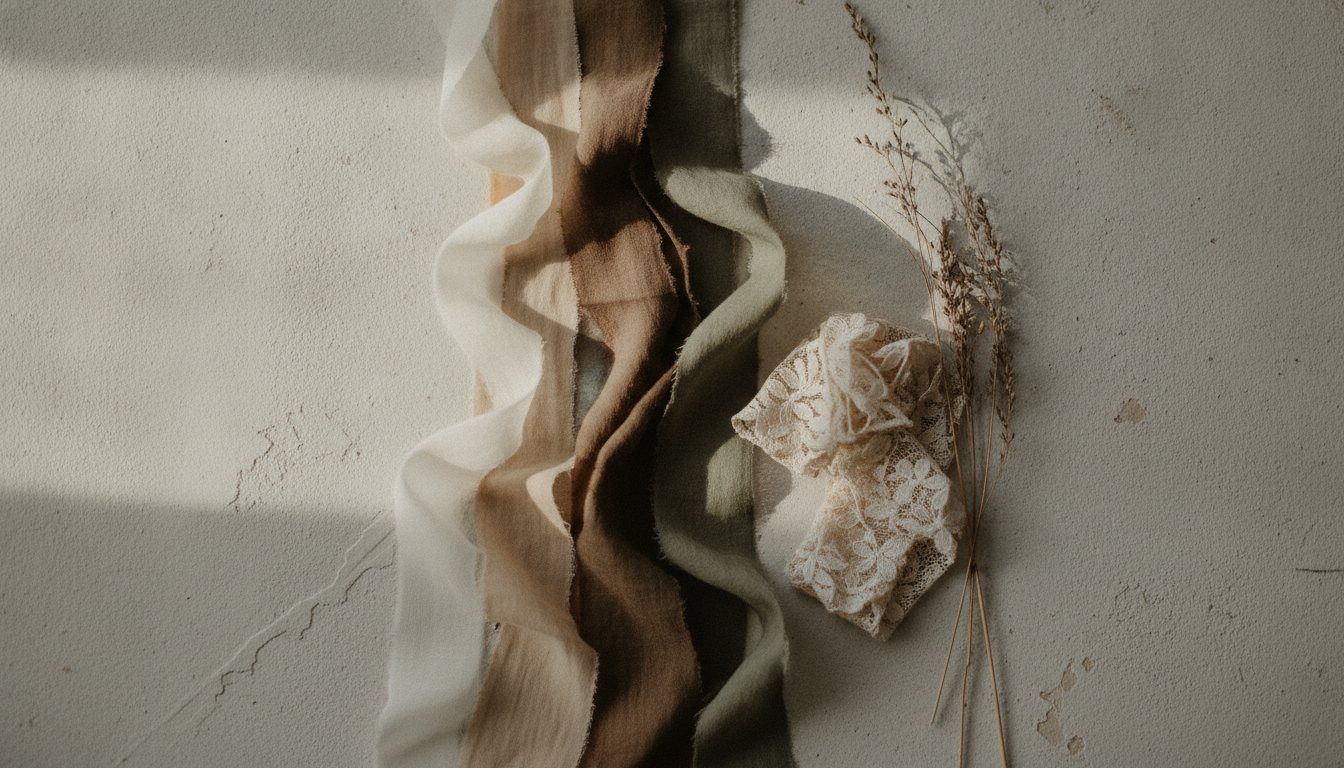
Pantone's 2026 Color of the Year is Cloud Dancer, PANTONE 11-4201, which Pantone describes as "a billowy white." It is the first white Pantone has ever chosen. On its own it is a blank canvas. At a wedding it is the base, and the accent colours you put on top of it decide what the room feels like.
I'm Ali Scott, Founder and Lead Planner at Ali Rose Events Co., and colour is where I start every design. These are the seven palettes I would put in front of a couple planning a 2026 wedding: what makes each one work, which flowers and linens carry it, what the wedding party wears, and which season it belongs to.
Key Takeaways
- Pantone's 2026 Color of the Year is Cloud Dancer (PANTONE 11-4201), the first white it has ever picked, and it works as a neutral base under any palette here
- The Knot's 2026 trend list includes "Paloma" sunset hues (pinks, reds and orange) and tonal browns such as chocolate, latte and portobello
- Season comes first: pastels and bright colours suit spring and summer; jewel tones, berries and earth tones suit fall and winter
- A 60/30/10 split (dominant, secondary, accent) keeps a three to five colour palette from looking busy
- Warm and cool palettes need a bridging colour; in Regency pastels, butter yellow does that job
1. Jewel Tones: Emerald, Gold and Ivory
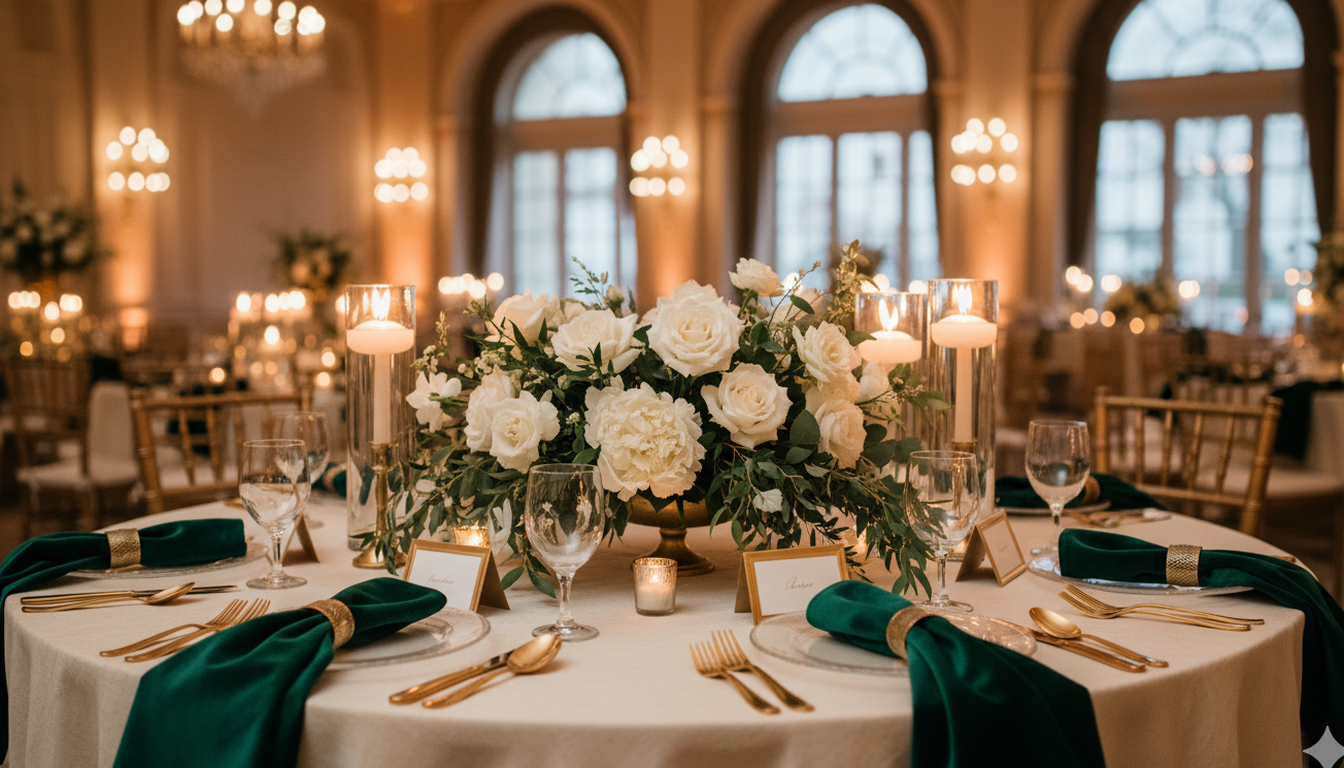
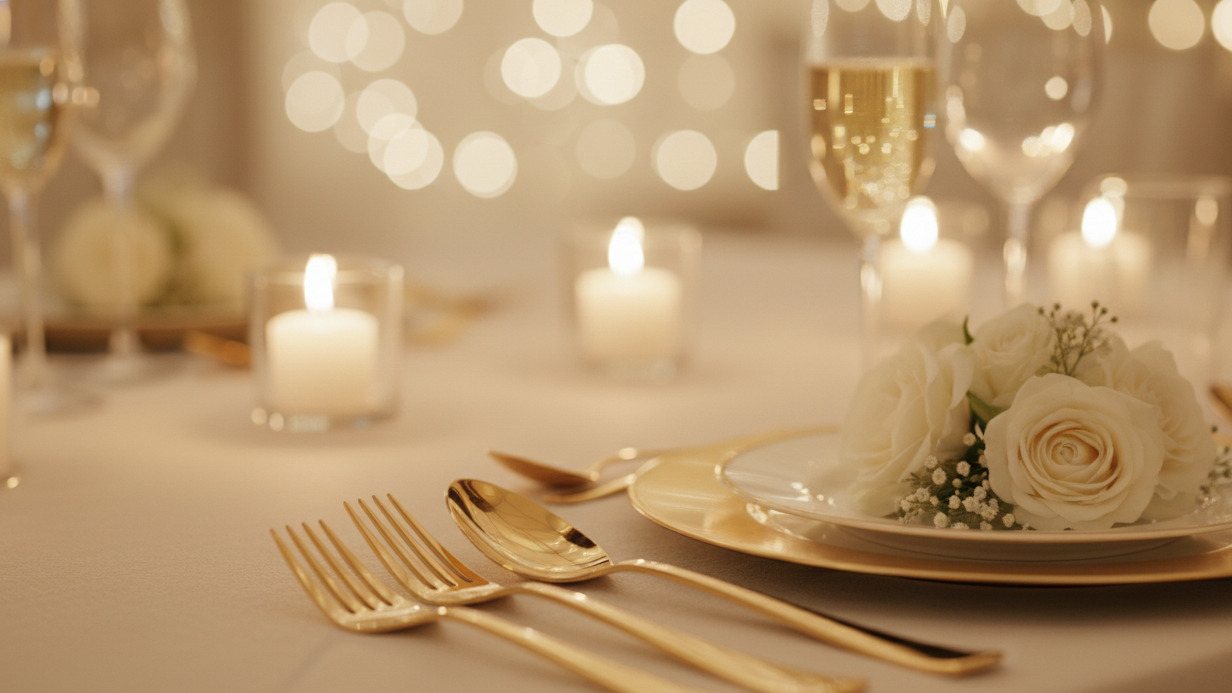
Ivory dupioni silk on every table, deep emerald velvet napkins folded into sharp peaks, gold cutlery catching the candlelight, and centrepieces full of white garden roses and dark trailing greenery. That is jewel-tone drama, and it is the richest palette on this list.
- Key colours: deep emerald, warm gold, ivory
- Best for: fall and winter weddings, ballroom receptions, candlelit rooms
- Venue tip: historic rooms with stone walls and dark wood, where the green plays off the texture
Go deep and lush with the flowers. Dark eucalyptus, white garden roses, chocolate cosmos, burgundy-black dahlias and trailing ivy. Ask the florist for full, almost overgrown arrangements that spill over the vase. A few gilded leaves through the centrepieces will catch the candlelight.
For the wedding party, forest green in matte satin or velvet. A shiny synthetic green looks cheap next to real candlelight. Put one or two attendants in champagne or ivory and the green never overwhelms the photos.
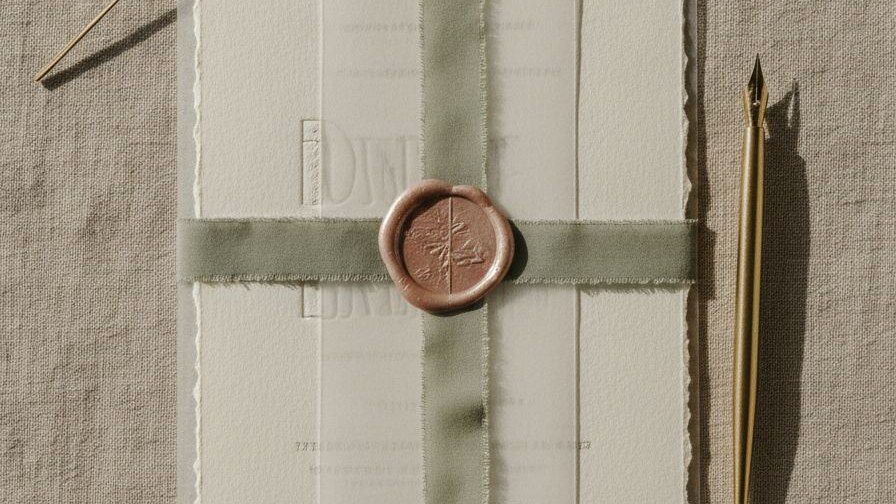
Stationery wants letterpress on thick cream card with gold foil edging, a forest green envelope liner and a gold wax seal. A trailing botanical motif in the corners finishes it. Letterpress costs more than digital printing, so get two or three stationer quotes before you commit.
On the tables, ivory dupioni or velvet cloths, never plain cotton, because texture carries this palette. Cluster ivory and cream pillars at different heights instead of lining up uniform tapers, and use gold holders throughout.
Peak season is October through February. Short days, dim rooms and guests in layers all suit it. Summer works only in a fully indoor room with controlled lighting; I would save it for fall.
The trick is restraint. Too much emerald and you are at a holiday party, and adding red accents in November gets you there fast. Keep the green in the flowers and accents, let gold handle the metallics and stationery, and give ivory the linens and drapery. Emerald needs gold and ivory and nothing else.
2. Cobalt and Fuchsia: The Bold Statement
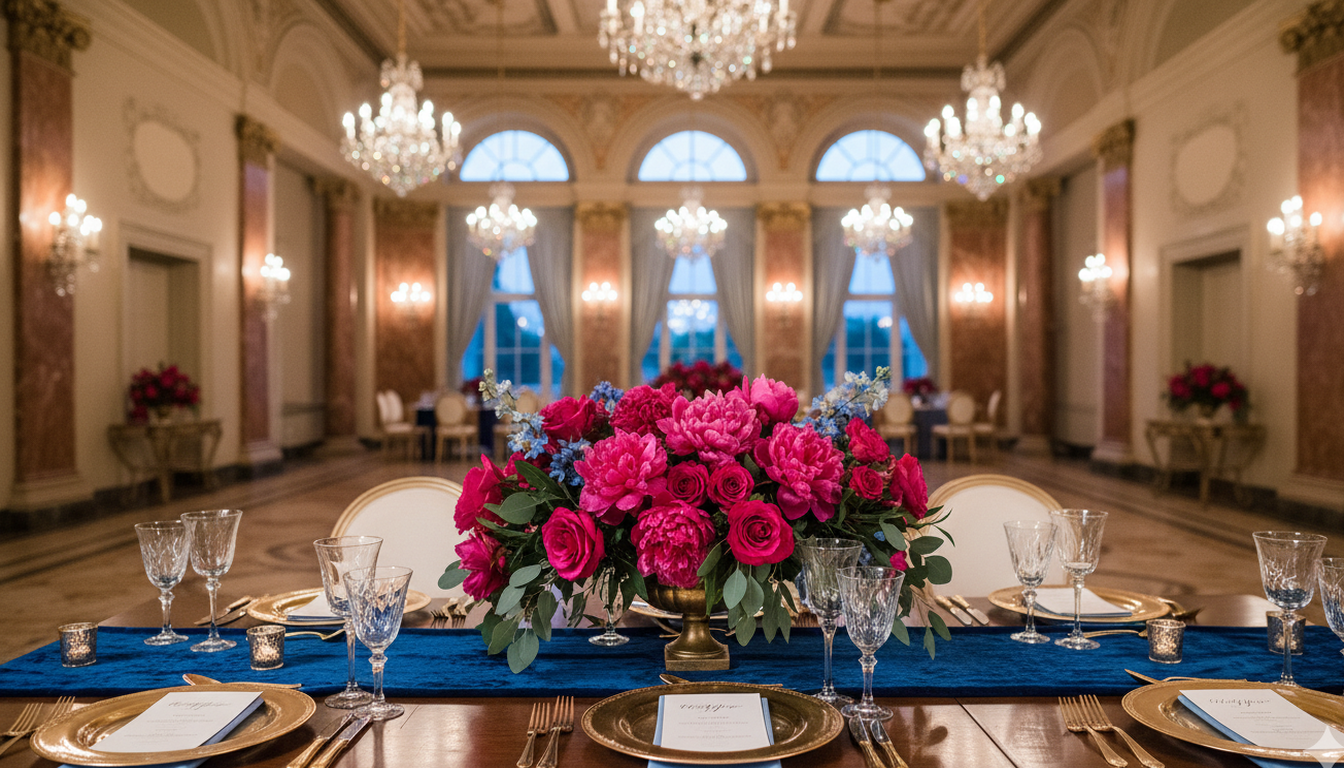
Cobalt blue and hot pink sound like a clash. On a table set with crystal glassware, gold-rimmed china and white Cloud Dancer linens, they click. It is confident and graphic, and it is my favourite pick for a summer couple who wants guests to stop at the door.
- Key colours: cobalt blue, fuchsia, white
- Best for: spring and summer weddings, modern rooms with architectural interest
- Venue tip: tall ceilings, clean lines and plenty of daylight, such as gallery spaces, converted warehouses and hotel ballrooms
The flowers need volume, because sparse arrangements disappear against colour this strong. Hot pink ranunculus, fuchsia dahlias, white lisianthus as a soft filler, and blue anemones or delphinium for cobalt that grows that way instead of being dyed.
Dress the wedding party in fuchsia satin. The cobalt belongs to the tables and the stationery. One attendant in cobalt looks deliberate; two starts to look like an accident.
This is the one palette where paper can go maximalist: bright white card, cobalt block lettering, fuchsia envelope liners and a single gold foil monogram so there is no third competing ink. It also reads vividly on screen, which helps digital save-the-dates.
Use crisp white tablecloths, not ivory or champagne, so both colours read true. Cobalt tapers in plain gold holders, fuchsia napkins folded flat, and no gold chargers. This palette is about colour, and extra gold tips it into too much.
Spring and summer only. Long daylight suits the saturation, and outdoor tables work if the cloths are weighted against the wind. Skip it from November through January, when indoor winter light makes cobalt look cold and fuchsia look harsh.
Commit fully. Do not dilute it with pastels or soften it with blush halfway through planning. Half a bold palette looks like a mistake; the whole thing looks like a decision.
3. Moody Berry: Burgundy Meets Blackberry
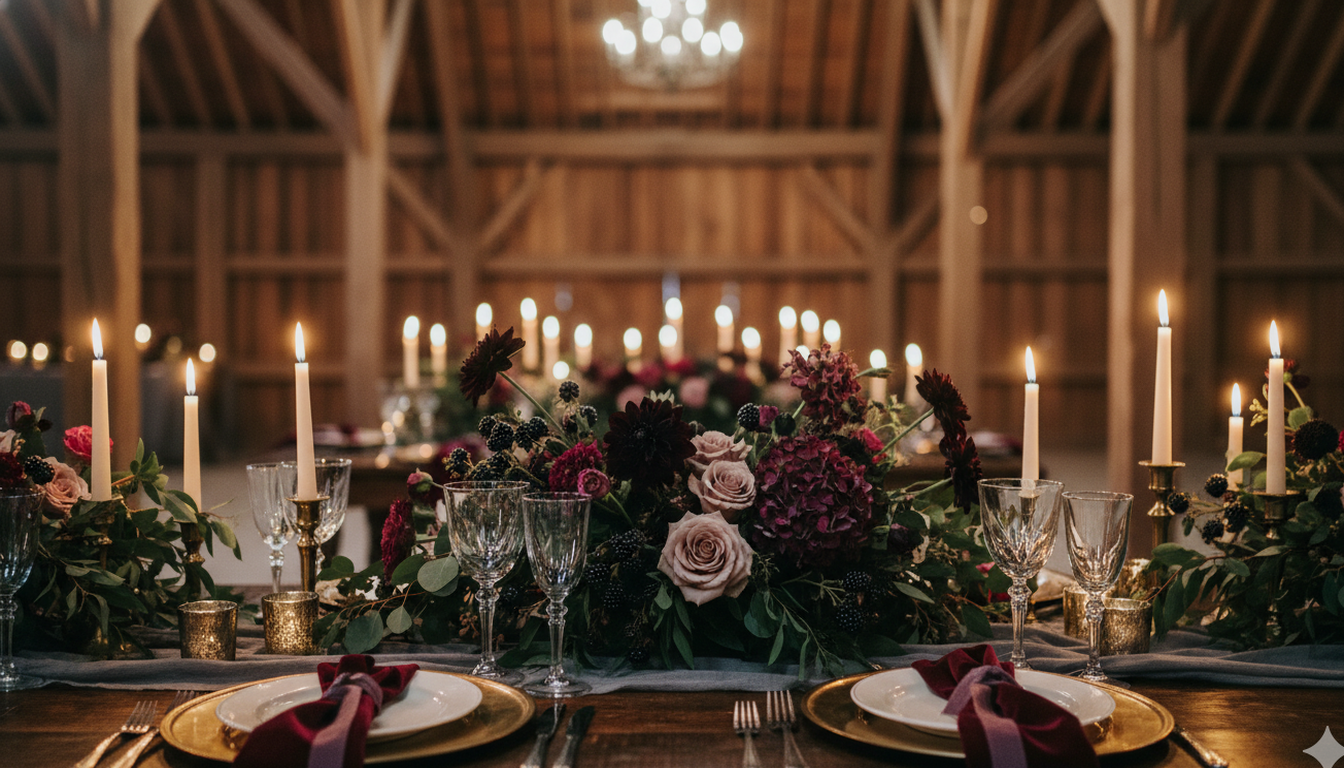
A barn with exposed beams, long tables lit by dozens of dripping tapers, and centrepieces of burgundy dahlias, blackberry roses and dusty pink peeking through. Moody berry may be the most romantic palette here, and it suits a smaller guest list.
- Key colours: burgundy, blackberry, dusty rose, champagne
- Best for: fall and winter weddings, barn venues, gatherings under 100 guests
- Venue tip: vineyards and wineries, where the setting already matches the palette
Texture is everything in the flowers. Burgundy dahlias, deep purple lisianthus, dusty mauve garden roses, chocolate cosmos and burgundy scabiosa, with dried pampas or bunny tail grass for movement. An asymmetric shape, heavy on one side and trailing on the other, fits the slightly wild mood.
Put the wedding party in dusty rose or dusty mauve chiffon or silk charmeuse: desaturated, never bright pink. That quiet blush beside deep burgundy is the pairing I love most in this palette. All-champagne attendants are the lighter alternative and look beautiful in candlelit photos.
For stationery, burgundy letterpress on cream or blush paper, an oxblood wax seal and a ribbon of burgundy and champagne around the suite. Black ink on cream with one burgundy watercolour botanical is the quieter version.
Champagne or warm ivory tablecloths, never white, which is too stark against deep tones. Cluster long oxblood and ivory tapers down the centre in blackened bronze or antique brass holders. Candlelight on deep berry is the whole point of this palette.
This is a September to December palette. In summer the mood collapses the moment someone opens a door and August light floods in. In fall the colours match the world outside.
The light colours are what make it work. Without dusty rose and champagne in the dresses, napkins and flowers, it turns heavy. With them, it reads romantic instead of gloomy.
4. Sunset Paloma: Warm Reds, Pinks and Burnt Orange
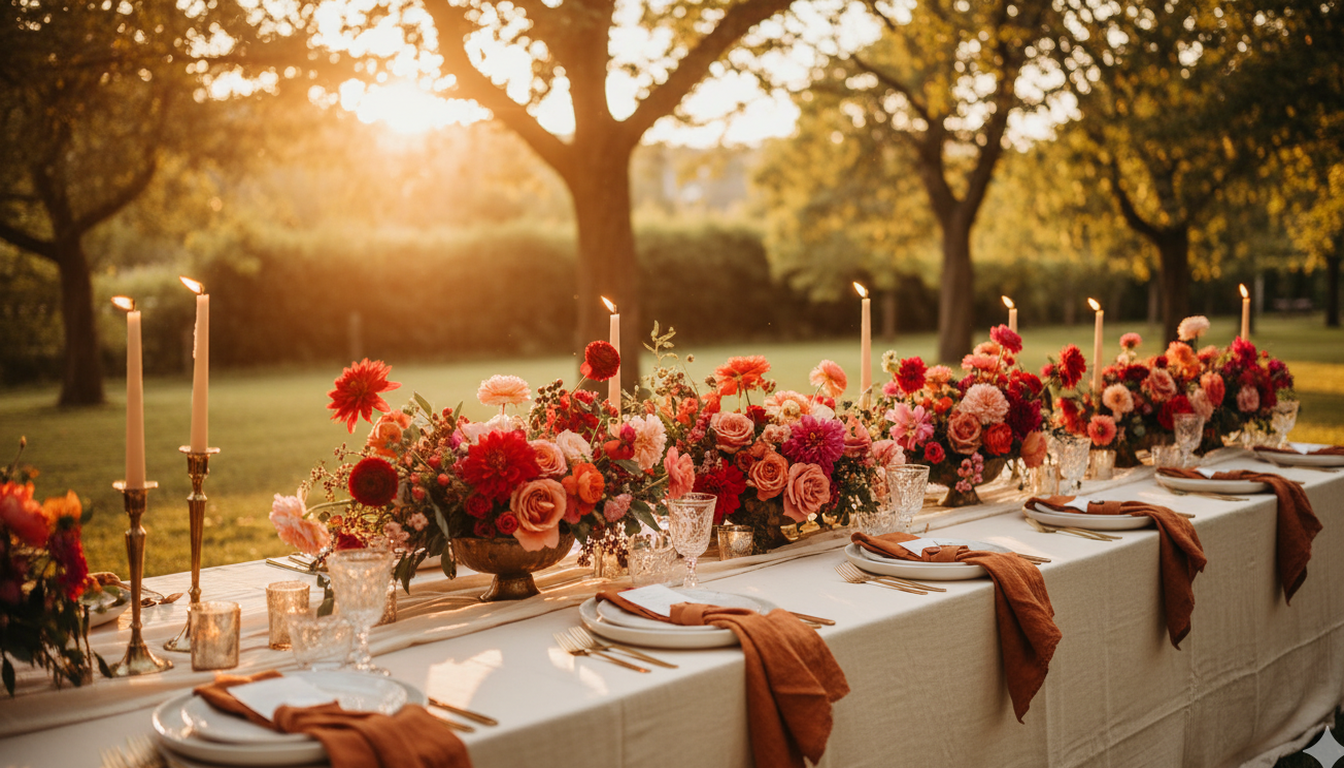
The Knot names "Paloma palettes" among its 2026 wedding trends: sunset shades of vibrant pink, red and orange. Set it outside at golden hour with red garden roses, pink ranunculus, burnt orange napkins and cream linens, and the table looks like a sunset you can sit inside. It is warm without being heavy.
- Key colours: warm red, vibrant pink, burnt orange, cream
- Best for: summer outdoor ceremonies, garden parties, rustic but polished venues
- Venue tip: lakeside and outdoor settings in late summer, where golden hour does half the styling
Red garden roses, coral peonies, burnt orange dahlias, pink ranunculus and peachy sweet peas carry the flowers, with copper grasses and soft olive foliage to ground them. Ask for arrangements that look gathered from a field rather than built in a studio.
For the wedding party, terracotta, burnt sienna or dusty coral: the muted warm shade between coral and rust, never bright orange. A mix of coral and sienna across the party looks intentional.
Stationery on warm cream card with red ink in a serif or script that feels handwritten, and a burnt orange wax seal. A custom botanical border from an illustrator ties the suite to your exact flowers. Letterpress and good digital printing look close in this palette, so digital on textured stock is the place to save.
Cream or warm ivory tablecloths, burnt orange napkins, and ivory and amber pillars grouped in clusters. Amber glass votives through the tables glow as the evening light fades.
July through September is its home, with early fall close behind. The colours mirror the sky at golden hour, which is why the outdoor photos look painted. Spring works indoors but feels off-season.
Choose this palette if you want warmth and colour without going tropical. Your photographer will like it too: it is made for natural light.
5. Earthy Tuscan: Terracotta, Olive and Mustard
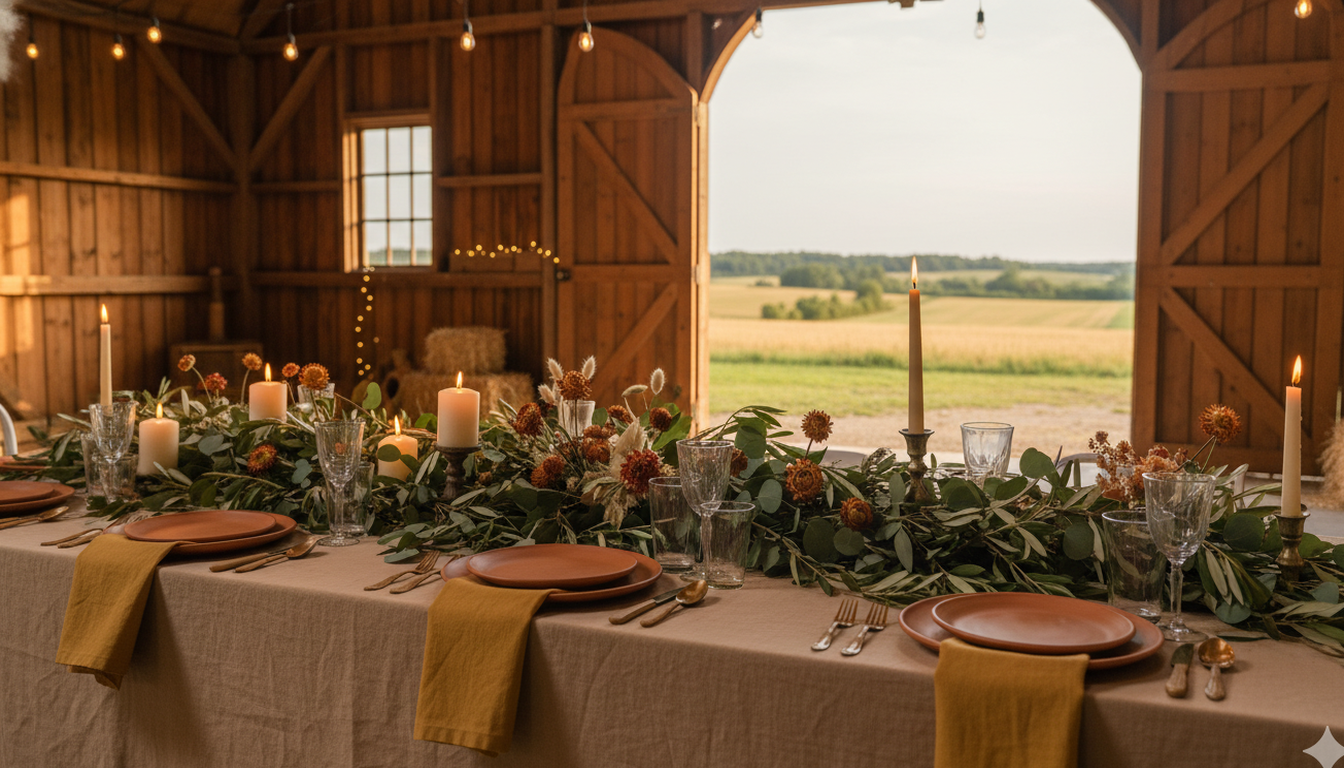
Terracotta with olive green, mustard and warm beige looks like it grew out of the ground. It does not compete with an outdoor setting; it belongs to it, which makes it the most natural fit on this list for farm and barn country like Northumberland County, Ontario.
- Key colours: terracotta, rust, mustard, olive, warm beige
- Best for: outdoor and garden ceremonies, farm weddings, vineyard receptions
- Venue tip: barns and farm properties, where the wood and fields already carry half the palette
Almost every flower looks good against these tones. Copper dahlias, marigolds, dried chamomile, amber chrysanthemums, rust ranunculus, olive and eucalyptus foliage, and dried pampas and bunny tail. Go generous and untamed. A dried-flower installation on the ceremony arch holds up all day without wilting.
Warm sage, dusty olive or terracotta for the wedding party. Avoid anything with a cool undertone: this palette has no cool in it, and a cold-toned dress reads as a styling error.
Terracotta letterpress on warm cream or kraft paper, a hand-drawn botanical in mustard and olive, twine instead of ribbon, or a pressed marigold tucked into the envelope. Every paper detail can feel handmade here.
Use real linen tablecloths in warm beige or cream, not polyester, because the texture matters beside terracotta ceramics. Unbleached linen napkins, ivory and beeswax pillars in loose clusters, and small terracotta pots as candle vessels or bud vases.
Late summer and fall are its seasons, and fresh olive greenery carries it into late spring. An October wedding in this palette matches the landscape outside the barn doors.
Set a long wooden farm table with terracotta plates, an olive and eucalyptus garland down its length, mustard napkins folded in plain rectangles and pillar candles in rustic holders. It is the most forgiving palette to style: if it looks like it came from a garden or a field, it fits.
6. Tonal Browns: The 70s Revival
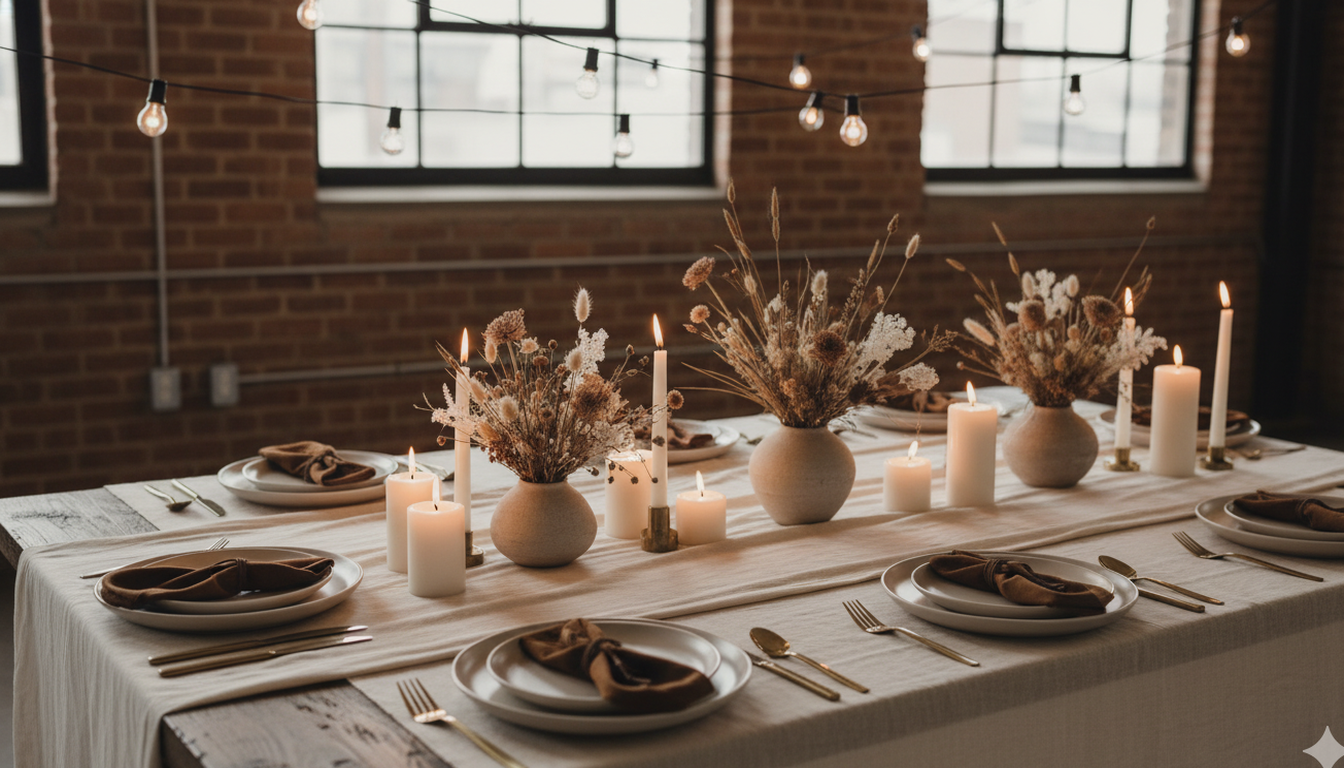
Chocolate, latte, portobello and cream, all in one tonal family and layered through texture. The Knot's 2026 colour trends call tonal browns a cozy alternative to white and cream. It is warm and unexpected, and a long way from an all-white room.
- Key colours: chocolate, latte, portobello, cream
- Best for: fall indoor weddings, loft venues, intimate dinners
- Venue tip: converted industrial spaces, where exposed brick and warm wood add to the earthiness
Brief the florist on tone and texture. Caramel chrysanthemums, cream garden roses, cappuccino dahlias, chocolate cosmos, dried pampas, bunny tails and cotton bolls. Skip bright green foliage, which pulls focus; use dried olive branches or seeded eucalyptus instead.
Dress the wedding party in latte, caramel or warm champagne, from the middle of the palette rather than either end. Caramel velvet is the fall and winter choice and photographs richer than flat satin.
Warm cream or kraft card with brown ink in a serious serif or script, a dried botanical in the wax seal, and a pale mushroom liner or none at all, since kraft envelopes are already on palette. Less is more on this suite.
Velvet tablecloths in mushroom or cappuccino do the heavy lifting of the dominant colour. Matte ceramic vases instead of glass, cream pillars of different widths on small wood or stone trivets, and tall dried pampas at each table end. Velvet linens usually rent for more than cotton or polyester, so price them early.
October through February, indoors. This palette wants a dim loft and warm pendant lighting, not bright summer sun.
Texture makes or breaks it. Without velvet, matte ceramics, dried grasses and clustered candles, you have a beige wedding. With them, the room feels collected and intentional.
7. Soft Regency Pastels: Lavender, Lilac and Blush
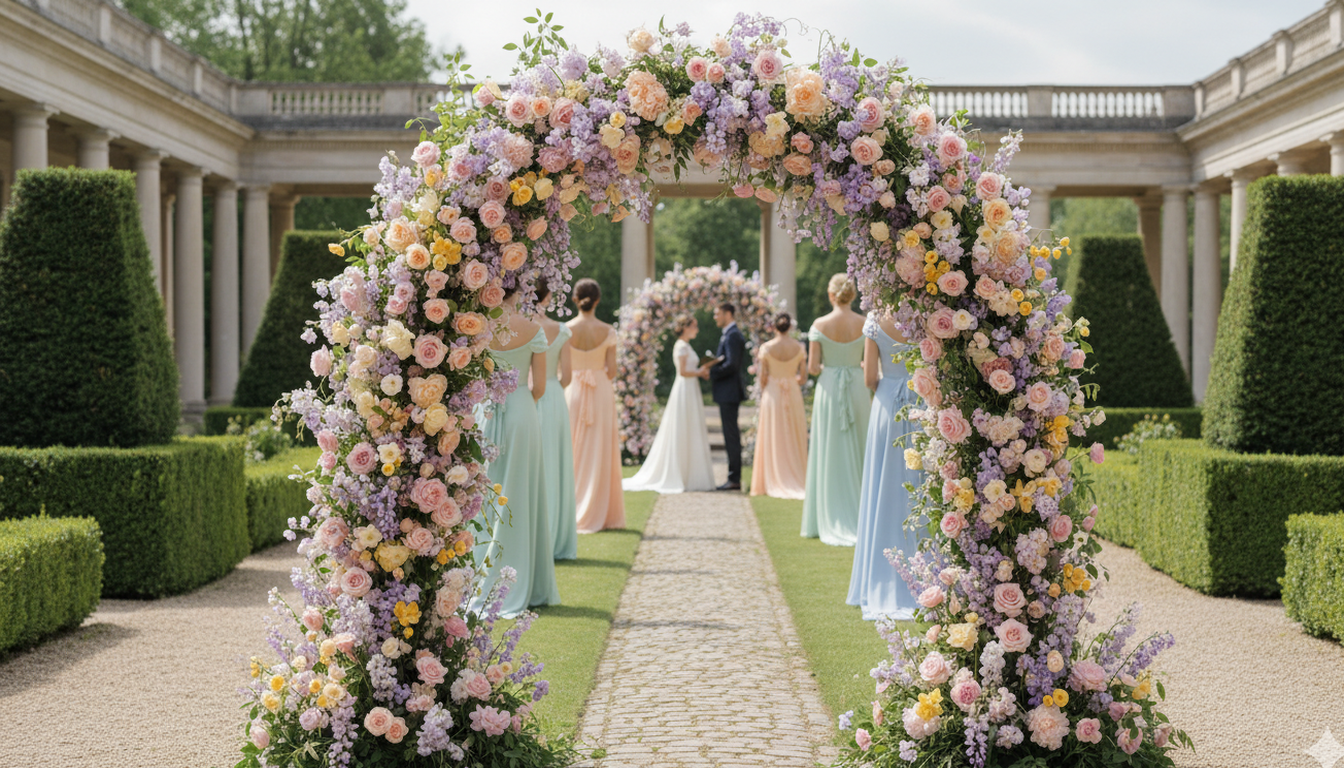
Lavender, lilac, blush, peach and butter yellow, mixed into one soft cloud of colour like a watercolour. After seasons of bold, saturated palettes, this one feels like an exhale.
- Key colours: lavender, lilac, blush, peach, butter yellow
- Best for: spring and summer garden ceremonies, estates with formal grounds
- Venue tip: estates and gardens with columns, clipped hedges and good natural light
This is not a minimalist palette. Garden roses in blush and pale peach, sweet peas in lilac and lavender, butterfly ranunculus in butter yellow, white lisianthus as filler and lavender tucked throughout. Stock is underrated here: it adds height, scent and soft colour. Ask for a ceremony arch that looks like a Monet.
Mix lavender, dusty lilac, blush and soft peach across the wedding party, one or two attendants in each. This is the rare palette where mismatched dresses look planned, as long as every shade sits at the same softness. One attendant in butter yellow is a lovely accent.
Watercolour-washed invitations with a botanical motif in the full pastel range, printed on cotton paper. Letterpress is the wrong tool for this palette. A lavender wax seal and a silk ribbon in blush or butter yellow finish it.
Soft blush or the palest lavender tablecloths, not white: the slight colour cast unifies the table. Cream pillars, ivory tapers in simple antique gold holders and thin bud vases with single stems. Use fewer candles than in the other palettes. This one wants light and air.
April through July is peak season, outdoors in long late-spring light. A pastel arch at a May ceremony is my favourite image in this whole list. In fall, pastels work indoors with warm lighting but look lost outside.
Keep every shade in the same tonal family. You are mixing warm (blush, peach) with cool (lavender, lilac), and butter yellow is the bridge. Without it the palette reads as indecisive; with it, the room reads as one soft statement instead of a bag of Easter candy. It is the hardest palette on this list to execute well.
How to Choose Your Palette
Do not start with colours you like. Start with three questions:
- What season is the wedding? Spring and summer open up pastels and bright colours. Fall and winter call for jewel tones, berries and earth tones. Season is the first filter.
- What does the venue look like? A barn wants different colours than a ballroom. Photograph the empty venue at the hour of the reception and plan around what you see.
- What feeling do you want? Energetic: cobalt and fuchsia. Intimate: moody berry. Grounded: earthy Tuscan. Formal and rich: jewel tones.
The palette sets the brief for every design vendor that follows: florist, linens, stationery, attendant dresses and lighting. Settle it before those meetings and each quote starts from the same reference. Bring the list in questions to ask your wedding vendors to the same meetings, and fit the design spend inside a realistic wedding budget before the florist quotes.
The Colour Ratio Guide
Split every palette on this list 60% dominant, 30% secondary and 10% accent. The dominant colour is usually a neutral (ivory, cream, champagne or Cloud Dancer white) and shows up in linens and drapery. The secondary colour is the signature (emerald, cobalt, burgundy, terracotta) and lives in the flowers, stationery and accent pieces. The accent (gold, fuchsia, dusty rose) appears sparingly in napkins, candle holders and small details. When the secondary colour starts competing with the dominant one, the room looks busy.
Related reading:
- 5 Stunning Flower Arrangements That Transform a Dinner Table: how a palette comes to life in five centrepiece styles.
- 8 Best Wedding Flowers and What Each One Means: the stems behind each palette, with their seasons.
- Wedding bouquet styles for 2026: carry the palette down the aisle.
- 5 Wedding Planning Mistakes and How to Avoid Them: settle the budget before the colours.
Palette design is part of how Ali Rose Events Co. plans weddings in Northumberland County, Ontario. The Signature Bloom, our partial planning package, includes vendor sourcing, budget tracking and a timeline, so the florist, linens and stationery all start from one palette. See our planning packages or book a consultation and bring a photo of your venue.