Most wedding budgets break for the same five reasons: a number chosen before anyone asked for a quote, a venue booked before the full cost was known, 13% HST and service charges left off the spreadsheet, an Instagram budget copied onto a real one, and friends hired without a contract. The Knot's 2025 Real Weddings Study found that nearly half of the US couples it surveyed discovered their first budget fell short of the real cost. Every one of these mistakes is cheaper to prevent than to fix.
Key Takeaways
- The Knot's 2025 Real Weddings Study found nearly half of US couples say their initial budget fell short of their real wedding costs.
- The same study put the venue alone at about $8,000 USD on average, and about $22,000 USD with catering, alcohol and rentals, against a $33,000 USD average wedding.
- Ontario charges 13% HST (Canada Revenue Agency), so a $35,000 vendor total can become $39,550 before a single service charge or tip.
- In a 2025 LendingTree survey of 1,050 US newlyweds, 52% regretted how much they spent and 67% took on wedding-related debt.
- A friend working as a vendor needs the same written contract as a stranger: services, deadline, payment and a plan if they cannot deliver.
1. Setting a Budget Before Researching Prices

The number comes first, the quotes come second, and the gap between them is where the stress starts. A couple types "$25,000 wedding" into a search bar, decides it sounds doable, then calls a venue and hears "$12,000 for a Saturday, catering minimum not included." Half the budget is gone before a photographer, a dress or a single stem is booked.
After that, the budget turns into a suggestion. A $200 linen upgrade. A $300 dessert table. Each one feels small. Switching from buffet to plated service at $35 more per guest sounds modest until you multiply it by 120 guests: $4,200, before tax.
The cost is not only money. In LendingTree's 2025 newlywed survey of 1,050 US couples, 52% said they regret how much they spent, 67% took on wedding-related debt, and 16% said money has already made them think about divorce.
Flip the order. Get real quotes for your guest count and date, not "starting at" prices from a website. Then set the budget from what weddings in your area cost. The guide to building a realistic wedding budget goes category by category.
Your research list:
- Venue rental, with the minimums and what is included
- Catering per guest, for your expected guest count
- Photography, priced as a full-day package
- DJ or band, with the Saturday rate
- Florals: centrepieces, ceremony piece and wedding party
- Hair and makeup, per person, for everyone getting ready
- Cake or dessert table
- Transportation
- Officiant fee
A $20,000 budget is completely workable. It means different choices, not cheaper copies of a $40,000 plan: a smaller guest list, a Sunday instead of a Saturday, a restaurant reception instead of a ballroom. A 60-person Sunday brunch with a great playlist is a different kind of beautiful, not a lesser one.
2. Booking the Venue Before Hiring a Planner

The venue is the biggest single decision in the budget. The Knot's 2025 study put the average at about $8,000 USD for the venue alone and about $22,000 USD once catering, alcohol and rentals are included, against a $33,000 USD average wedding. Once the deposit is paid, the photographer, florist, DJ and caterer all have to fit inside whatever is left.
Here is how the math can go. Say the rental brochure reads $6,500. Add the mandatory catering minimum, chair and linen rental, parking, and a service charge that sits past the first page of the contract, and the real number can reach $22,000 against an $8,000 venue budget. That is a blown budget on one line item before anyone else is booked.
Then everything else gets squeezed. The photographer is downgraded, the DJ is cut, and the floral budget becomes whatever is left over.
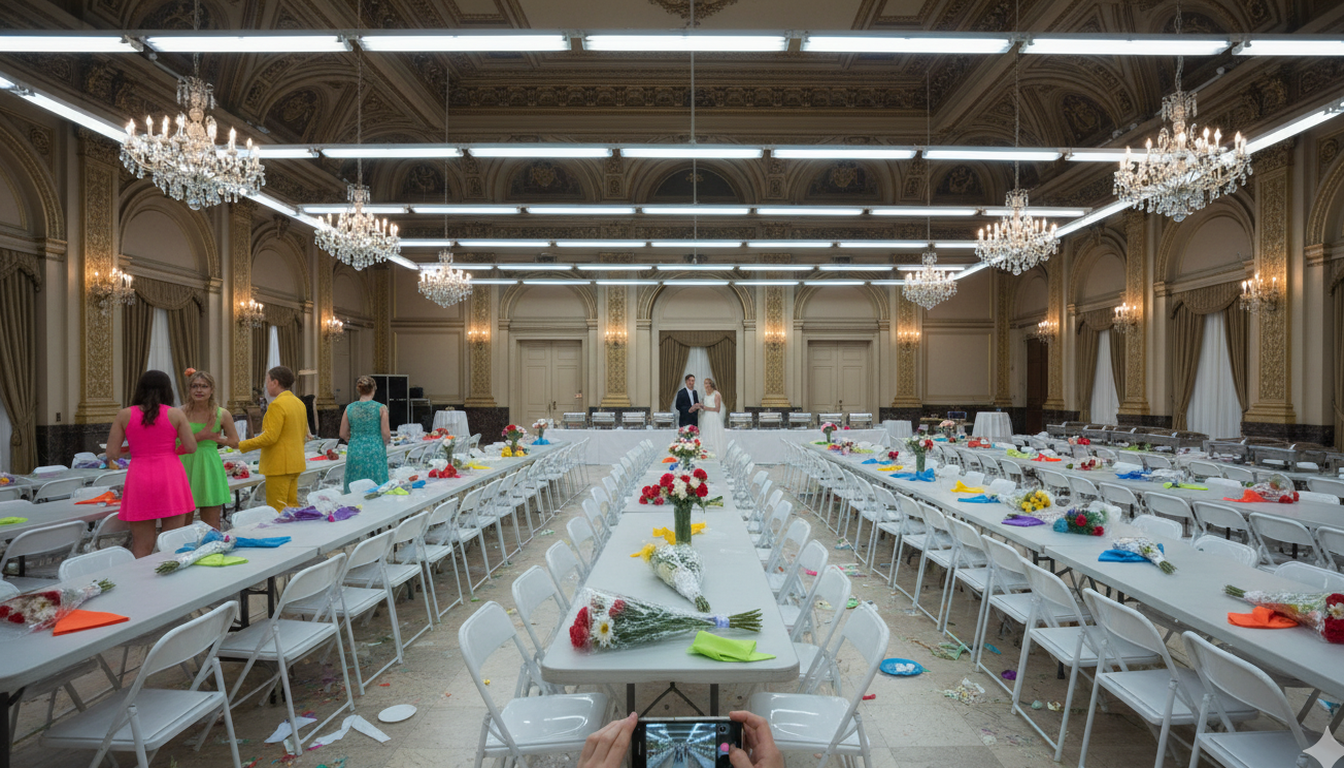
A beautiful room can eat the budget and leave nothing for the details.
Ask every venue these before you sign:
- What is the total cost with every fee included, not the rental rate?
- Is there a food and beverage minimum, and what happens if we miss it?
- Are chairs, tables, linens, sound and parking included?
- Is there a corkage fee if we bring our own wine?
- What is the overtime rate after the booked end time?
- Can we bring in our own caterer?
- What is the deposit, and what are the cancellation terms?
Talk to a planner, even for a single consultation, before the first venue visit. A planner reads a venue contract for the minimums, overtime and service charges, and helps you compare full costs instead of brochure prices. Our planning packages start with The Rosebud, day-of coordination, and go up to full-service planning. For the rest of the booking order, see how far in advance to book wedding vendors.
Popular dates get booked early, but urgency is not a reason to sign before you understand the full cost. If a venue will not put the total in writing, walk away.
3. Ignoring the HST and Service Charge Math
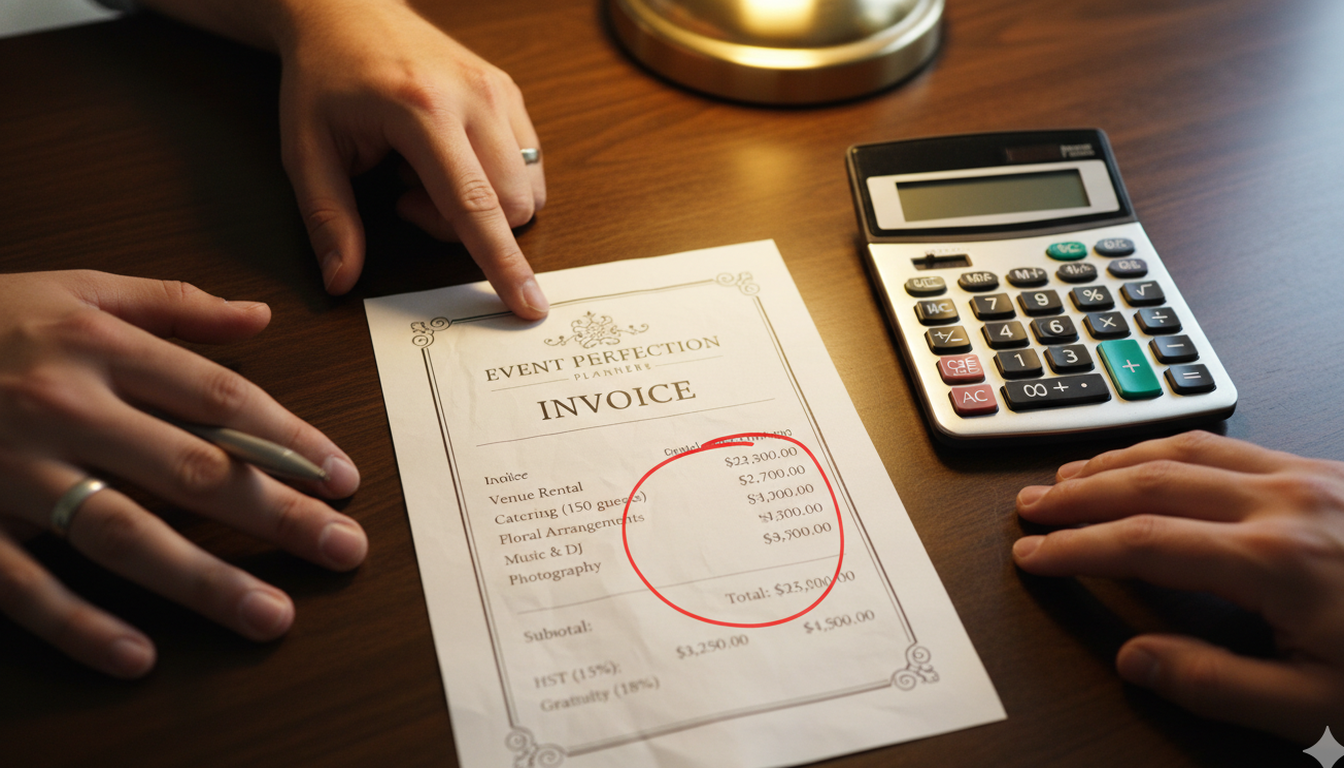
Ontario charges 13% HST, per the Canada Revenue Agency's GST/HST rate table. Say a caterer quotes $5,000. Add 13% HST ($650) and an 18% service charge ($900), and the invoice reads $6,550. That is 31% more than the number in your spreadsheet, on one vendor.
Across a $35,000 vendor total, HST alone can add $4,550 if every vendor charges it. Service charges and tips come on top. Say a couple's spreadsheet lands on exactly $35,000. The venue adds a 15% service charge, the caterer adds HST and an 18% service charge, and the photographer and florist each add HST. The total can climb past $42,000, and the invoices tend to arrive in the same final month.
Plan for it from day one. Add 30% to every quote in your spreadsheet: 13% for HST and room for service charges and tips. A $3,000 quote goes in as $3,900. An $8,000 quote goes in as $10,400. If some vendors include tax or charge no service fee, the difference becomes your buffer.
The add-on checklist:
- HST: 13% in Ontario. Other provinces charge 5% GST, plus provincial sales tax in some; check the CRA table for yours
- Catering service charge on food and beverage (ask for the percentage)
- Bartender tips
- Hair and makeup tips
- Driver tips
- Delivery and setup fees from florists, rental companies and the bakery
- Valet parking and coat check, if you use them
- The rehearsal dinner, which is easy to forget
Ask every vendor, in writing: "Does this quote include HST? Is there a service charge or an expected tip?" A vendor who takes offence at that question was planning to surprise you later.
Keep $500 to $1,000 aside as a contingency. Something will run long or need a last-minute fix. If you never touch it, it becomes honeymoon money.
4. Trying to Recreate a Social Media Wedding on Half the Budget
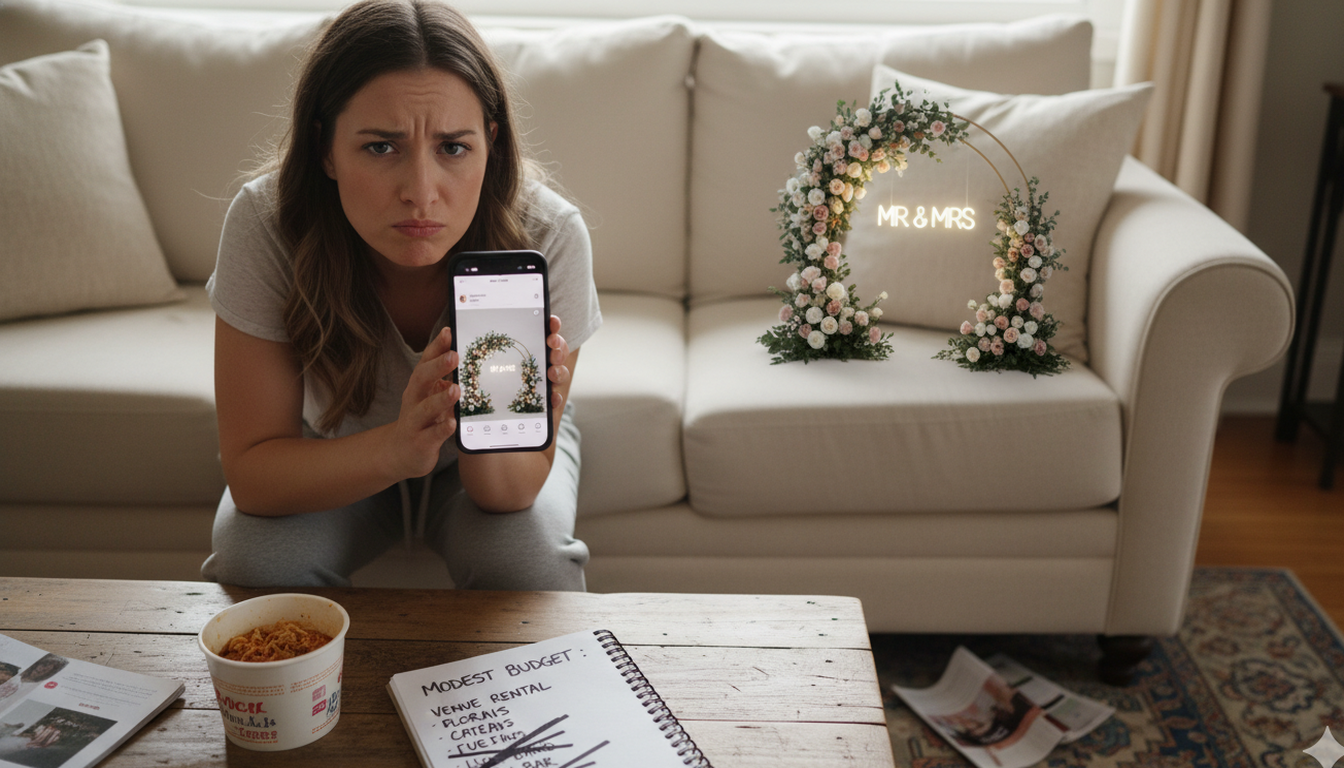
That wedding with 400 candles, a 12-foot floral arch and a five-tier cake did not come cheap, and nobody posted the invoice. Social media shows the finished room. It never shows the spreadsheet, the upgrades or the credit card statement.
The trap is building a mood board of a dozen screenshots and then finding that your $30,000 budget covers a third of what you pinned. That gap hits when you are already attached to the vision.
Save feelings, not items. Pin images for the mood they carry: intimate, playful, dramatic, candlelit. A softly lit reception does not need 400 pillar candles. It needs good lighting and 80 candles placed with care. For the palette side of the board, the guide to 2026 wedding colour palettes pairs each palette with a season.
Swaps that still photograph beautifully:
- A greenery-forward arch instead of a full floral one
- Candle clusters in place of floral on every surface
- One statement installation instead of flowers everywhere
- Flowers in season in Ontario instead of imported stems
- A small single-tier cake for the cutting photo and a sheet cake in the kitchen for serving
- A rented greenery wall instead of a fresh floral wall
For centrepieces at several price points, see five flower arrangements for the dinner table.
A $30,000 wedding can be stunning. So can a $15,000 one. They look different from a $100,000 wedding, and that is not a failure. Guests remember whether they laughed and whether the food was good. Nobody measures the arch.
5. Hiring Friends as Vendors
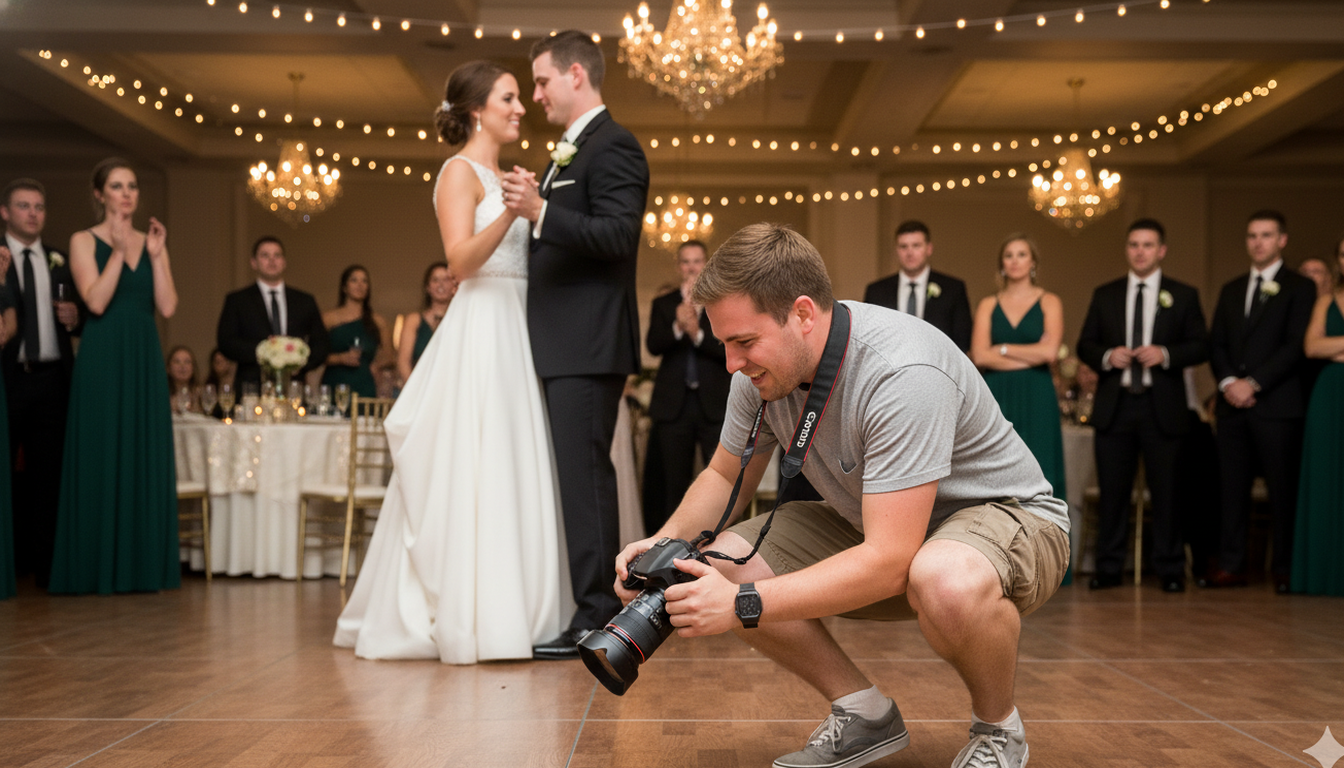
Your cousin has a good camera. Your roommate does calligraphy. Your uncle has a DJ setup in the basement. Hiring them feels personal and saves money.
It also comes with no contract, no liability insurance and no recourse if the photos are out of focus or the place cards arrive three days late. Giving a friend hard feedback on their work, or replacing them mid-planning, can strain the friendship long after the wedding.
Say a hobbyist friend photographs the day to save $3,000. They are nervous, pulled into conversations with guests they know, unsure of the timeline and working with one lens. Some photos are lovely. The getting-ready shots are unusable, the ceremony is dark, and there is no clean photo of both sets of parents together. That is the risk you are pricing in.
A contract protects your friend too. It tells them exactly what is expected and when. Put these in writing:
- The services, in detail
- The delivery date and format
- Payment, even if discounted
- What counts as finished work
- Cancellation terms for both sides
- The plan if they cannot do it
If they will not sign a contract for paid work, thank them warmly and hire a professional. The exception is a friend whose business is the service, with a portfolio, insurance and standard contracts. Hire them exactly as you would anyone else and pay their rate. For the questions to put to every vendor, friend or not, see questions to ask your wedding vendors.
The Pattern Behind All Five Mistakes
Each one is a decision made with half the information. And they feed each other: the budget set without research leads to a venue booked before its full cost is clear, the venue takes more than planned, and suddenly asking Uncle Dave to DJ sounds sensible.
The fix is unglamorous: get complete numbers before you commit. Ask about overtime, corkage, cancellation and what "all-inclusive" leaves out. Those questions are not rude.
The order that works:
- Research real vendor costs in your area before setting a budget
- Talk to a planner, even for one consultation
- Tour venues with the full cost in hand
- Build the spreadsheet with HST and service charges already in it
- Build the inspiration board around feelings, not items
- Hire every vendor with a contract, whatever the relationship
The private client planning portal on this site includes a budget tracker, so the quotes, tax and deposits sit in one place from the first call.
Have questions about budgeting your wedding in Northumberland County, Ontario or beyond? Book a consultation and bring your guest count, season and venue type. We will go through realistic costs so you plan from real numbers.